Let’s talk about the single most important piece of real estate on Amazon—the Buy Box. That small section on the right side of every product page where customers click “Add to Cart” or “Buy Now” might seem unremarkable at first glance. But here’s the reality: somewhere between 80% and 90% of all Amazon purchases flow through that button.
If you’re not winning the Buy Box, you’re essentially invisible to the vast majority of shoppers. Your product might as well not exist.
The frustrating part? Many sellers believe they’re doing everything right. They’ve got competitive prices. Their products are in stock. They’re responding to customers. Yet they’re still watching competitors capture the Buy Box while they’re left wondering what went wrong.
The truth is that Amazon’s Buy Box algorithm has grown remarkably sophisticated. It’s no longer a simple calculation where the lowest price wins. In 2025, the algorithm weighs multiple factors simultaneously, and understanding how these elements interact is the difference between thriving and barely surviving on the platform.
After analyzing the latest research and data, we’ve identified seven proven strategies that consistently help sellers capture and maintain Buy Box dominance. These aren’t theoretical concepts—they’re actionable tactics that successful sellers are implementing right now. Let’s break them down.
1. Master Your Seller Performance Metrics
Before anything else—before pricing, before inventory, before fulfillment methods—Amazon evaluates whether you deserve to be in the Buy Box conversation at all. Your seller performance metrics are the gatekeepers, and Amazon has been tightening standards significantly.
Here are the critical metrics you need to monitor obsessively:
- Order Defect Rate (ODR): This is arguably the most important metric. Amazon’s official threshold is 1%, but here’s what many sellers don’t realize: reports indicate that sellers with ODR above 0.5% are already losing Buy Box visibility in 2025, regardless of how competitive their pricing might be. You need to aim for as close to zero as possible.
- On-Time Shipping Rate: Late shipments don’t just frustrate customers—they directly tank your Buy Box eligibility. Every late delivery is a mark against you in Amazon’s system.
- Valid Tracking Rate: Every single order needs proper tracking information. No exceptions. Amazon wants to know where packages are at all times.
- Pre-Fulfillment Cancel Rate: Canceling orders before shipment signals that you have inventory management problems. Amazon interprets this as unreliability.
- Customer Response Time: How quickly you respond to buyer messages matters more than many sellers realize. Slow responses suggest poor customer service capabilities.
- Negative Feedback Rate: Obviously, fewer complaints is better. But it’s not just about avoiding negatives—it’s about actively generating positive experiences.
The key insight here is that Amazon isn’t looking for occasional excellence. They want sustained, consistent performance across all these metrics over time. One great week doesn’t offset months of mediocre performance. You need to build systems that maintain high standards day after day, order after order.
Practical Steps to Improve Your Metrics
Start by auditing your current performance in Seller Central. Identify your weakest metric and focus improvement efforts there first. Set up automated alerts when any metric starts trending in the wrong direction. And remember: prevention is easier than recovery. Once your metrics slip, climbing back takes significant time and effort.
2. Leverage FBA for Maximum Buy Box Advantage
Here’s an uncomfortable truth for Fulfilled by Merchant (FBM) sellers: the Buy Box algorithm heavily favors Fulfillment by Amazon (FBA). This isn’t Amazon being arbitrary—it’s a logical extension of their customer-first philosophy.
When you use FBA, Amazon controls the entire fulfillment experience. They know exactly how quickly orders will ship, they guarantee Prime delivery speeds, and they handle customer service for fulfillment issues. This predictability makes FBA offers inherently lower-risk from Amazon’s perspective.
The advantages of FBA for Buy Box competition include:
- Automatic Prime Eligibility: That Prime badge does heavy lifting for Buy Box wins. Prime members—Amazon’s most valuable customers—see your products as more attractive.
- Faster Fulfillment Speeds: Amazon’s massive warehouse network enables delivery speeds that most FBM sellers simply cannot match.
- Built-In Performance Protection: FBA essentially outsources your fulfillment metrics to Amazon’s world-class logistics operation. Fewer late shipments, fewer defects, fewer problems.
- Customer Service Integration: Amazon handles returns and fulfillment-related inquiries, ensuring consistent customer experience.
Now, this doesn’t mean FBM sellers are completely locked out. Seller Fulfilled Prime offers a path to compete more effectively, though the requirements are demanding. Some FBM sellers also succeed by positioning inventory in strategic locations that enable delivery speeds competitive with FBA.
But for most sellers, the math is clear: FBA provides such a significant Buy Box advantage that the fees are often worth paying, especially for competitive products where Buy Box ownership directly determines sales volume.
3. Implement Smart, Dynamic Pricing Strategies
This is where many sellers go wrong. They assume that having the lowest price guarantees Buy Box wins, so they engage in endless price wars that destroy their margins—often without even winning the Buy Box they sacrificed profitability to chase.
The reality is more nuanced. Yes, price matters. But Amazon’s algorithm considers “competitive” pricing, not necessarily “lowest” pricing. A seller with slightly higher prices but superior metrics, faster fulfillment, and consistent inventory can absolutely beat a rock-bottom-priced competitor.
Here’s what smart pricing strategy looks like in 2025:
- Use Automated Repricing: Amazon’s algorithm monitors prices in real-time. If you’re using static pricing, you’re bringing a knife to a gunfight. Automated repricing tools that respond to market conditions are no longer optional—they’re essential.
- Price Competitively, Not Cheaply: Your goal should be staying within the competitive range while protecting your margins. Often, being within 3-8% of the lowest price is sufficient to win if your other factors are strong.
- Consider Total Landed Cost: Amazon factors in shipping costs when evaluating Buy Box eligibility. For FBM sellers especially, your item price plus shipping fee is what the algorithm evaluates.
- Monitor Cross-Channel Pricing: Here’s something many sellers miss: Amazon actively checks if your products are priced lower elsewhere on the internet, including your own website. If they find lower prices, your Buy Box can be suppressed entirely.
- Avoid Destructive Price Wars: Racing to the bottom might feel like you’re competing aggressively, but you’re often just destroying profitability without gaining meaningful Buy Box share. Compete smarter, not just cheaper.
The Repricing Balance
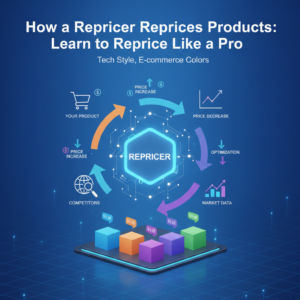
The best repricing approach balances three factors: competitiveness (staying in the running for the Buy Box), profitability (maintaining margins that make the sale worthwhile), and responsiveness (adjusting quickly as market conditions change). Tools that understand all three dimensions consistently outperform simple “match the lowest price” strategies.
4. Maintain Optimal Inventory Levels
Inventory management might seem like an operational concern rather than a Buy Box strategy, but the two are deeply connected. Amazon’s algorithm actively considers your stock levels when making Buy Box decisions—and this goes beyond just avoiding stockouts.
Here’s what you need to understand about inventory’s impact on Buy Box performance:
- In-Stock Head Start: Amazon prioritizes sellers who maintain consistent inventory availability. Reliability is rewarded in the algorithm.
- Low Stock Penalty: Your Buy Box share starts declining before you actually run out of stock. As inventory drops to concerning levels, Amazon begins shifting Buy Box allocation to sellers who can reliably fulfill orders.
- Immediate Stockout Impact: Once you’re out of stock, you’re immediately removed from Buy Box rotation. And when you restock, you don’t automatically return to your previous position—you need to earn it back.
- Geolocation-Based Rotation: This is increasingly important in 2025. Amazon now considers where your inventory is physically located relative to shoppers. Having inventory positioned closer to customers can help you win the Buy Box even without the lowest price.
The practical implication is clear: invest in demand forecasting and proactive reordering. Don’t wait until stock is critically low to place replenishment orders. Factor in lead times for manufacturing and shipping. Consider multi-warehouse strategies if you’re using FBM, or leverage Amazon’s distributed inventory programs if you’re using FBA.
5. Optimize Your Product Listings and Content Quality
Here’s a factor that many sellers overlook entirely: listing quality directly impacts Buy Box eligibility. Amazon has been placing increasing emphasis on content completeness and quality as a Buy Box factor.
Think about it from Amazon’s perspective. They want the Buy Box winner to represent the product well. A listing with poor images, incomplete bullet points, or missing product information creates a bad customer experience—exactly what Amazon wants to avoid.
Key listing elements that affect Buy Box performance:
- Complete Product Data: Every field should be filled. Missing information signals to the algorithm that your listing isn’t fully optimized.
- High-Quality Images: Professional product photography that meets Amazon’s requirements. Multiple angles, lifestyle images where appropriate, proper resolution and formatting.
- A+ Content for Brand Registered Sellers: Enhanced brand content improves customer engagement signals, which Amazon factors into Buy Box decisions.
- Backend Optimization: Search terms, attributes, and backend fields need proper attention. Incomplete backend data can hurt Buy Box eligibility.
- Return Rate: High return rates suggest product-listing mismatch or quality issues. Both hurt your Buy Box standing.
There’s compelling evidence that listing optimization can dramatically improve Buy Box share. One seller reported jumping from 42% to 89% Buy Box ownership in just two weeks by addressing listing quality issues—without changing their price at all. That’s the power of content optimization.
6. Deliver Exceptional Customer Service
Amazon is, at its core, a customer-obsessed company. Their entire business model depends on buyers trusting that they’ll have great experiences on the platform. It follows logically that customer service excellence is heavily weighted in Buy Box decisions.
Customer service metrics that impact Buy Box eligibility include:
- Response Time: How quickly do you reply to buyer messages? Amazon tracks this. Slow responses suggest you’re not prioritizing customer care.
- Customer Satisfaction Scores: Post-purchase surveys and feedback ratings provide Amazon with direct signals about your service quality.
- Return Handling: How efficiently and professionally you process returns matters. Make it easy, and customers are less likely to leave negative feedback.
- Issue Resolution: Problems will happen. What matters is whether you resolve them before they escalate to A-to-Z claims or negative reviews.
The research is clear: customer service metrics are among the most important factors for Buy Box determination in 2025. Sellers who invest in responsive, proactive customer service consistently outperform those who treat it as an afterthought.
Building Customer Service Systems
Don’t rely on checking messages manually once a day. Set up notification systems so you can respond quickly. Create templates for common inquiries to ensure fast, consistent responses. Train anyone involved in customer communication on your standards. And always err on the side of making the customer happy—the cost of a refund or replacement is almost always less than the cost of damaged metrics.
7. Build Account History and Long-Term Credibility
If you’re a newer seller struggling to win the Buy Box despite doing everything else right, this might be your answer: Amazon doesn’t fully trust you yet.
Account age and selling history function as credibility signals in Amazon’s system. New sellers—typically those with less than six months of history—often find themselves excluded from Buy Box consideration regardless of how competitive their pricing or how strong their other metrics might be.
Amazon’s logic here is straightforward risk management. A new seller could potentially fail to fulfill orders, provide poor service, sell counterfeit products, or simply disappear. By requiring sellers to prove themselves over time, Amazon protects customers from these risks.
For newer sellers, the path forward involves:
- Professional Seller Account: This is non-negotiable. Individual accounts are not Buy Box eligible under any circumstances.
- Perfect Execution: Every single order matters when you’re building your track record. Ship fast, communicate proactively, resolve issues immediately.
- Patience: Accept that the first several months are about building credibility. Focus on establishing the foundation for long-term success.
- Consider FBA: Leveraging Amazon’s fulfillment can help compensate for limited seller history.
For established sellers, the message is about maintenance. Your history is an asset—protect it by maintaining consistent high performance. Long-term sellers with clean track records have inherent advantages that newer competitors cannot easily overcome.
Understanding Buy Box Rotation and Suppression
Even if you implement all seven strategies perfectly, you won’t win the Buy Box 100% of the time—and that’s by design. Amazon rotates Buy Box ownership among eligible sellers based on how closely matched they are across all factors.
This rotation system means:
- Shared Ownership: Multiple sellers with strong metrics and competitive pricing will share the Buy Box over time. Your goal is maximizing your share, not achieving monopoly.
- Unequal Distribution: Rotation isn’t necessarily equal. A seller with slightly better factors might win 70% while a close competitor gets 30%.
- Amazon Retail Dominance: When Amazon itself is selling a product, they typically capture the majority of Buy Box time. Competing directly with Amazon Retail is extremely difficult.
Buy Box suppression is a different scenario—when nobody wins because Amazon removes the Buy Box entirely. This can happen when pricing is higher on Amazon than elsewhere online, when all sellers have poor metrics, or when listing quality is insufficient. If you’re experiencing suppression, investigate the root cause rather than assuming it’s a competitive issue.
Bringing It All Together: The Holistic Approach to Buy Box Success
The sellers who consistently win the Buy Box in 2025 aren’t those who’ve mastered one factor—they’re the ones who’ve optimized across all seven dimensions simultaneously. It’s a balancing act that requires attention to metrics, fulfillment, pricing, inventory, listings, customer service, and long-term credibility.
No single factor will carry you to Buy Box dominance. Excellent metrics won’t overcome uncompetitive pricing. The lowest price won’t compensate for poor fulfillment. Fast shipping won’t matter if you’re constantly out of stock.
Success requires:
- Balance: Optimizing all factors rather than over-indexing on one
- Consistency: Maintaining high performance over time, not just during peak periods
- Adaptability: Responding to Amazon’s evolving algorithm requirements
- Data-Driven Decisions: Using analytics and automation rather than guesswork
- Customer-First Mindset: Remembering that Amazon ultimately prioritizes buyer satisfaction above all else
The good news is that this complexity creates opportunity. Many sellers still think winning the Buy Box is simply about having the lowest price, which means they’re competing on only one dimension while you compete across all seven.
How Zupricer Helps You Win the Buy Box Intelligently
Managing all these factors manually is overwhelming. Prices change constantly, competitors adjust their strategies, and Amazon’s algorithm continues evolving. Trying to keep up without the right tools is like trying to win a race while running backward.
This is exactly why we built Zupricer. Our intelligent repricing platform understands that winning the Buy Box isn’t just about price—it’s about finding the optimal price point that maximizes your chances while protecting your profitability.
Unlike basic repricing tools that simply chase the lowest price (destroying your margins in the process), Zupricer takes a sophisticated approach. Our algorithms consider competitive dynamics, your seller performance factors, and market conditions to find pricing sweet spots that win the Buy Box without racing to the bottom.
Zupricer helps you implement dynamic pricing strategies that respond to real-time market conditions, set intelligent price boundaries that protect your profit margins, and compete effectively without the destructive price wars that plague so many Amazon sellers.
The sellers thriving in 2025 are those who’ve moved beyond manual pricing and single-factor strategies. They’re using intelligent tools that optimize across multiple dimensions simultaneously—exactly what Zupricer was designed to deliver.
Ready to stop guessing and start winning the Buy Box consistently? Let Zupricer show you what intelligent repricing can do for your Amazon business.