Something strange is happening to Amazon sellers right now. Established businesses that thrived for years are watching their sales flatline or plummet. Seller forums are filled with desperate posts about 50-60% revenue drops. Products that used to fly off virtual shelves now sit stagnant, accumulating storage fees while sellers scramble to understand what went wrong.
If your Amazon sales have hit a wall, you’re not alone—and more importantly, you’re not imagining things. The marketplace has fundamentally changed, and strategies that worked perfectly fine two years ago are now actively hurting your business.
Here’s the uncomfortable truth: Amazon raised the bar significantly in 2025, and many sellers haven’t caught up. The algorithm is smarter, performance standards are stricter, competition is fiercer, and the old playbook is obsolete. New seller growth hasn’t collapsed because demand disappeared—it collapsed because the requirements for success moved substantially higher.
But here’s the good news: stuck sales aren’t a death sentence. They’re a diagnostic signal pointing to specific, fixable problems. This guide will help you identify exactly what’s blocking your growth and give you a concrete roadmap to break through. Whether you’re dealing with Buy Box losses, account health warnings, listing problems, or pricing confusion, you’ll find actionable solutions below.
Let’s figure out what’s really going on with your business—and fix it.
The Buy Box Problem: Why 80-90% of Your Potential Sales May Never Happen
If there’s one factor that determines Amazon selling on amazon success more than any other, it’s the Buy Box. That little “Add to Cart” button accounts for the vast majority of purchases on the platform. When you’re not winning it, most shoppers never even see your offer—they just click and buy from whoever owns that prime real estate.
Many sellers with stuck sales discover their Buy Box ownership has quietly eroded without them noticing. They’re still technically selling on Amazon, but they’ve become invisible to most buyers.
Common Buy Box Killers
Several factors can strip you of Buy Box eligibility or reduce your share of it:
- Poor seller performance metrics: If your Order Defect Rate (ODR) has crept above 0.5%, you’re likely losing Buy Box share regardless of how competitive your pricing is. Amazon has tightened this threshold considerably.
- Static pricing in a dynamic market: Amazon’s algorithm monitors price changes in real-time. If you’re still using fixed prices while competitors run automated repricing, you’re bringing a knife to a gunfight.
- Fulfillment disadvantages: FBM sellers face an uphill battle against FBA competitors who receive algorithmic preference for faster, more reliable delivery.
- Cross-channel price problems: This one catches many sellers off guard. If your products are priced lower on your own website, eBay, or other platforms, Amazon may suppress your buy box suppression entirely.
- Inventory inconsistency: Running low on stock doesn’t just risk stockouts—the algorithm starts reducing your Buy Box share before you actually run out.
- Geolocation factors: Amazon now considers where your inventory is located relative to customers. Sellers with strategically positioned inventory gain advantages.
How to Diagnose Buy Box Problems
Open Seller Central and check your Featured Offer percentage for your key products. If you’re winning the Buy Box less than 70% of the time on products where you should be competitive, you’ve found a primary cause of your stagnant sales. The fix requires understanding which specific factors are costing you—pricing, metrics, fulfillment, or inventory—and addressing them systematically.
Account Health: The Foundation That Makes Everything Else Possible
Think of your Account Health Rating as the foundation of your Amazon business. When it’s solid, all your other optimization efforts can actually work. When it’s cracked, nothing else you do matters—you can have perfect listings and competitive prices, but poor account health will still tank your visibility and sales.
Amazon has become significantly more aggressive about enforcing performance standards. The Account Health Rating (AHR) system monitors policy compliance constantly, and violations trigger consequences faster than ever. One overlooked metric can quietly suppress your listings or even deactivate your entire account.
Critical Metrics You Must Monitor
- Order Defect Rate (ODR): This combines A-to-Z claims, chargebacks, and negative feedback. Keep it well below 1%—sellers above 0.5% are already experiencing Buy Box suppression.
- Late Shipment Rate: Any pattern of late deliveries directly impacts your visibility and Buy Box eligibility. Amazon expects on-time shipping, every time.
- Pre-Fulfillment Cancel Rate: Canceling orders before shipping signals inventory management problems and damages your standing.
- Customer Response Time: Slow responses to buyer messages hurt your performance scores. Amazon expects replies within 24 hours.
- Valid Tracking Rate: Missing tracking information on shipped orders negatively impacts your account health.
- Customer Satisfaction Scores: Post-purchase surveys and feedback ratings carry increasing weight in the algorithm.
The Performance Standards Shift
What many sellers don’t realize is that Amazon has raised the bar across the board. Performance levels that were acceptable in 2023 now put you at a disadvantage. The platform expects higher standards, and sellers who haven’t upgraded their operations are falling behind.
If any of your metrics are in yellow or red zones, stop everything else and fix them first. No amount of listing optimization or advertising spend will overcome poor account health.
Listing Quality: Why Your Products Aren’t Converting
Amazon’s search and ranking algorithm has undergone a significant transformation. It’s now heavily AI-driven, prioritizing user engagement signals over simple keyword matching. The introduction of conversational AI means Amazon understands buyer intent and context, not just the words in your listing.
This shift has made listing quality more important than ever—and exposed sellers who relied on keyword stuffing or bare-minimum content.
Listing Problems That Kill Conversions
- Poor visual content: Low-quality images, missing lifestyle shots, and inadequate infographics fail to convince shoppers to buy. Your main image is especially critical.
- Incomplete product data: Missing information in titles, bullet points, descriptions, or backend fields leaves the algorithm with less to work with and shoppers with unanswered questions.
- No A+ Content: Sellers without enhanced brand content see measurably lower conversion rates compared to competitors who use it effectively.
- Weak mobile experience: Over 70% of Amazon customers shop on mobile devices. If your listing looks great on desktop but terrible on a phone, you’re losing the majority of potential buyers.
- Low Click-Through Rate (CTR): The algorithm heavily weights CTR as a ranking signal. If shoppers see your listing in search results but don’t click, Amazon interprets this as irrelevance.
- Poor Conversion Rate (CVR): Low conversion tells Amazon your listing isn’t meeting shopper needs, triggering ranking decreases.
The Mobile-First Reality
This point deserves extra emphasis: most of your potential customers are looking at your listing on a small screen. Yet many sellers create and review their listings exclusively on desktop computers, never checking how they appear on mobile.
Pull out your phone right now and look at your top products. Is the main image compelling at thumbnail size? Are your bullet points readable? Does your A+ Content display properly? If you’ve never done this exercise, you may be shocked at what you find.
A/B Testing: The Optimization Tool You’re Probably Ignoring
Amazon Experiments allows you to A/B test titles, images, and A+ Content to find what actually converts better. Yet most sellers never use it. They guess at what works instead of testing. Sellers who systematically test and optimize their listings see conversion rate improvements of 35% or more—that’s a massive competitive advantage you’re leaving on the table.
Inventory Management: The Silent Sales Killer
Inventory problems create a vicious cycle that’s hard to escape. When you run out of stock, you lose the Buy Box immediately and your ranking starts to decay. When you finally restock, you’re climbing back from a lower position, often against competitors who maintained consistent availability.
But the damage starts before you actually hit zero. Amazon’s algorithm begins reducing your Buy Box share when stock levels get low—it’s protecting customers from ordering products that might not ship. This “low stock penalty” means your sales decline before you run out, not just after.
Inventory Issues That Suppress Sales
- Stockouts: Running out removes you from Buy Box rotation and damages ranking recovery that can take weeks.
- Low stock warnings: The algorithm reduces your visibility before you actually run out.
- Inconsistent availability: Patterns of going in and out of stock signal unreliability to Amazon’s systems.
- Poor demand forecasting: Inability to anticipate sales peaks leads to reactive rather than proactive restocking.
- Desperation pricing: Raising prices dramatically when inventory runs low often backfires, accelerating ranking loss.
The In-Stock Advantage
Amazon actively prioritizes sellers with consistent inventory availability. This “in-stock head start” means reliable sellers get preferential treatment in the algorithm. Your inventory management isn’t just about avoiding stockouts—it’s about building trust with Amazon’s systems over time.
If your sales have been stuck, look at your inventory patterns over the past 90 days. Do you see stockouts or low-stock periods that correlate with sales declines? This might be your primary problem.
Pricing Strategy: Beyond the Race to the Bottom
Many sellers with stuck sales blame their prices—either believing they’re too high to compete or too low to sustain the business. But the real problem is usually the pricing strategy itself, not the specific price points.
Here’s a critical insight that too few sellers understand: in 2025, having the lowest price doesn’t guarantee you’ll win the Buy Box. Amazon’s algorithm considers amazon pricing alongside fulfillment speed, seller metrics, inventory availability, and other factors. Sellers are regularly winning the Buy Box at prices 3-8% higher than the lowest offer by excelling in these other areas.
Pricing Mistakes That Hurt Your Business
- Static pricing: Fixed prices cause rapid Buy Box loss as competitors using automated repricing constantly adjust to market conditions.
- Racing to the bottom: Endlessly matching or undercutting the lowest price destroys margins without guaranteeing wins.
- Ignoring total landed cost: Especially for FBM sellers, failing to account for shipping fees in pricing decisions leads to poor competitive positioning.
- No profit protection: Pricing below true profitability just to win the Buy Box creates unsustainable businesses.
- Cross-channel price conflicts: Not maintaining pricing parity across platforms triggers Amazon’s suppression systems.
- Competing with Amazon Retail: When Amazon itself sells the product, trying to beat their pricing usually destroys your margins while they still dominate Buy Box share.
The Dynamic Pricing Imperative
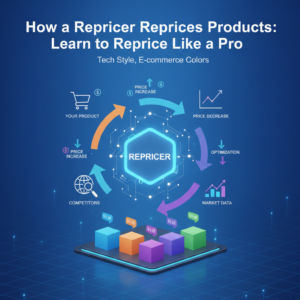
Amazon’s algorithm operates in real-time, and it expects competitive, responsive pricing. If you’re still using static prices that you update manually once a week (or less), you’re systematically losing to competitors who reprice automatically based on market conditions.
But dynamic repricing isn’t about always having the lowest price—it’s about having the optimal price that balances competitiveness with profitability. The best repricing strategies set intelligent floors to protect margins while staying competitive enough to win.
Traffic and Visibility: The Discovery Problem
Even perfect listings with great prices and strong metrics will fail without traffic. If shoppers can’t find your products, they can’t buy them.
What’s Killing Your Visibility
- Poor organic ranking: Not appearing on page 1 for relevant keywords means minimal organic traffic. Most shoppers never scroll past the first page.
- Low external traffic: Amazon’s algorithm now heavily weights quality external traffic for rankings. Sellers driving traffic from social media, email lists, or other sources get ranking boosts.
- Inadequate PPC strategy: Relying solely on organic traffic leaves money on the table. Not investing in sponsored ads—or running ineffective campaigns—limits your reach.
- Search suppression: Policy violations or quality issues can cause Amazon to hide your listings from search results entirely, often without clear notification.
- Catalog errors: Listings with incorrect catalog data sometimes can’t be properly optimized, limiting visibility.
The External Traffic Factor
This is a major shift many sellers haven’t adapted to: Amazon now rewards sellers who bring traffic from outside the platform. If you’re driving qualified visitors from social media, content marketing, email campaigns, or other channels, the algorithm takes notice and boosts your organic rankings.
Sellers who only rely on Amazon’s internal traffic are at a growing disadvantage compared to those building external audiences.
Customer Experience: The Feedback Loop You Can’t Ignore
Poor customer experience creates negative feedback loops that compound over time. Bad experiences lead to negative reviews and returns, which hurt your metrics, which reduce visibility, which forces you to compete harder on price, which strains your ability to provide good service. It’s a downward spiral.
Experience Issues That Drag Down Sales
- Slow response times: Not replying to customer inquiries within 24 hours damages your performance metrics and frustrates potential buyers.
- Difficult returns: Complicated or slow return processes generate negative feedback that hurts future sales.
- Escalating issues: Problems that turn into A-to-Z claims cause disproportionate damage to your metrics.
- Poor communication: Not proactively updating customers about order status or delays creates unnecessary friction.
- High return rates: Returns signal product-listing mismatch or quality issues, triggering algorithm penalties.
Customer service metrics are among the most important factors for Buy Box determination. Sellers who treat customer experience as an afterthought pay the price in lost visibility and sales.
How to Diagnose Your Specific Problem: A Step-by-Step Audit
Stuck sales usually result from multiple overlapping issues, but some problems are more urgent than others. Here’s how to systematically identify what’s hurting you most:
Step 1: Check Buy Box Ownership
Review your Featured Offer percentage in Seller Central. If you’re below 70% on products where you should be competitive, Buy Box loss is your primary issue. Focus there first.
Step 2: Audit Account Health
Navigate to your Account Health page and review every metric. Any indicator in yellow or red zones needs immediate attention before other optimizations will work.
Step 3: Analyze Listing Performance
Review click-through rates and conversion rates for your key products. Compare to category averages. Check how listings display on mobile devices.
Step 4: Evaluate Inventory Patterns
Look for stockouts or low-stock periods over the past 90 days. Check if sales declines preceded actual stockouts (indicating the low stock penalty at work).
Step 5: Review Pricing Strategy
Compare your pricing to Buy Box winners. Determine if you’re using dynamic repricing or static pricing. Verify price consistency across all your sales channels.
Step 6: Assess Traffic Sources
Check your organic ranking for key search terms. Analyze PPC campaign performance. Evaluate whether you have any external traffic strategies.
Step 7: Examine Customer Feedback
Read recent reviews and identify patterns in complaints. Check return rates and reasons. Review all customer service metrics.
The Recovery Roadmap: Fixing Stuck Sales Systematically
Once you’ve diagnosed your specific problems, here’s how to address them in order of urgency:
Immediate Actions (24-48 Hours)
- Fix any critical account health issues—these block everything else
- Verify inventory levels to avoid low-stock penalties
- Check cross-channel pricing to prevent Buy Box suppression
- Confirm Buy Box eligibility and understand why you’re losing
Short-Term Fixes (1-2 Weeks)
- Implement dynamic repricing with profit protection floors
- Optimize main images for mobile and conversion
- Enhance bullet points to be scannable and benefit-focused
- Launch basic PPC campaigns for key products
- Set up systems to respond to customers within hours
Medium-Term Improvements (1-3 Months)
- Build comprehensive A+ Content for brand-registered products
- Develop external traffic sources to boost organic rankings
- Implement inventory forecasting to prevent future stockouts
- Optimize all listing elements based on performance data
- Run Amazon Experiments to systematically improve conversion
Long-Term Strategy (3-6 Months)
- Build brand authority and reputation
- Develop multi-warehouse fulfillment for geolocation advantages
- Create content ecosystems to drive sustained external traffic
- Optimize profit margins through supplier negotiations and fee reduction
- Scale what works by doubling down on winning products and strategies
Breaking Through: The Holistic Approach to Sales Recovery
If there’s one thing to take away from this guide, it’s that stuck sales rarely have a single cause—and they never have a single solution. The sellers who successfully recover are those who address multiple factors simultaneously.
Think of it as a three-legged stool:
- Technical Excellence: Account health, performance metrics, policy compliance
- Listing Optimization: Content, images, mobile experience, A+ Content, conversion optimization
- Competitive Positioning: Pricing, inventory, fulfillment, customer service
Remove any leg and the whole structure collapses. You can’t optimize your way out of poor account health. You can’t price your way out of bad listings. You can’t advertise your way out of inventory problems. Recovery requires a comprehensive approach.
The Amazon marketplace isn’t getting easier. Standards are higher, competition is fiercer, and the algorithm is more sophisticated than ever. But sellers who diagnose their specific problems and implement systematic solutions are still finding growth—even in this demanding environment.
Take Control of Your Amazon Pricing Strategy
Of all the factors affecting stuck sales, pricing is often the most immediately actionable—and the most consistently mismanaged. Static pricing strategies are bleeding sellers dry, while destructive price wars are eroding margins across entire categories.
This is exactly why we built Zupricer. Our intelligent repricing platform understands that winning on Amazon isn’t about having the lowest price—it’s about having the optimal price that balances competitiveness with profitability.
Zupricer helps you break free from stuck sales by automating dynamic pricing with built-in profit protection. Our system responds to market conditions in real-time while respecting the floor prices you set based on your true costs. You stay competitive enough to win the Buy Box without racing to the bottom or manually monitoring prices around the clock.
Your sales are stuck for a reason. Often several reasons. But pricing is one factor you can fix immediately—and fixing it correctly creates breathing room to address everything else.
Ready to stop leaving money on the table? Discover how Zupricer can transform your amazon pricing strategy and help unstick your sales for good.