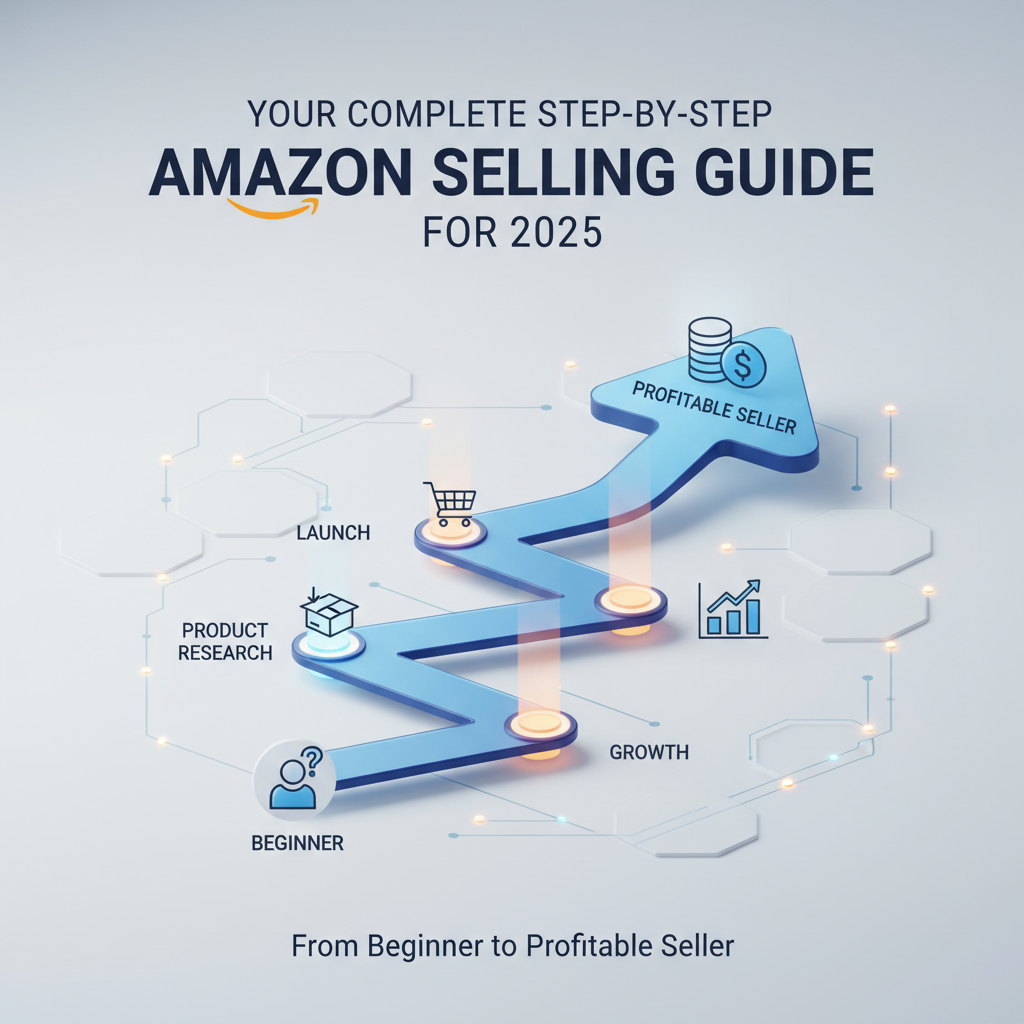
With over 300 million active users and third-party sellers now driving more than 60% of all product sales, Amazon remains the most lucrative marketplace for entrepreneurs looking to build a successful e-commerce business. But here’s the truth: jumping in without a clear roadmap is the fastest way to burn through your capital and enthusiasm.
Whether you’re a complete beginner or someone who’s dabbled in online selling before, this comprehensive guide will walk you through every step of launching and growing your Amazon business in 2025. Let’s cut through the noise and get you selling profitably.
Step 1: Select the Right Amazon Seller Account
Your Amazon journey begins with a fundamental choice between two account types, and picking the wrong one can cost you money from day one.
Individual Plan ($0.99 per item sold)
- No monthly subscription fee
- Best for sellers moving fewer than 40 items monthly
- Limited access to advanced selling tools
- Ideal for testing the waters before committing
Professional Plan ($39.99 per month)
- No per-item fee regardless of volume
- Access to advertising tools, reports, and Buy Box eligibility
- Ability to sell in restricted categories
- Essential for anyone serious about scaling
Here’s the math: if you plan to sell more than 40 items per month, the Professional plan pays for itself. Most successful sellers upgrade within their first few months anyway, so consider starting with Professional if you’re committed to building a real business.
Step 2: Set Up Your Seller Account and Legal Foundation
Amazon requires specific documentation before you can start selling. Have these ready to streamline your registration:
- Valid government-issued ID
- Tax identification number (EIN for businesses or SSN for individuals)
- Bank account details for receiving payments
- Credit card for account verification and monthly fees
- Phone number for two-factor authentication
While not mandatory, establishing an LLC offers significant advantages that seasoned sellers swear by. You’ll gain legal liability protection, tax flexibility, easier access to business banking, and improved credibility when negotiating with suppliers. The upfront cost of forming an LLC typically ranges from $50-500 depending on your state, but the protection it provides is invaluable as your business grows.
Step 3: Choose Your Fulfillment Strategy
This decision will shape your entire operation, affecting everything from profit margins to daily workload. In 2025, you have two primary options:
Fulfillment by Amazon (FBA)
With FBA, you ship inventory to Amazon’s warehouses, and they handle everything else—storage, picking, packing, shipping, and customer service. Your products automatically qualify for Prime, which significantly boosts conversion rates.
- Pro: Hands-off fulfillment lets you focus on sourcing and growth
- Pro: Prime badge increases visibility and trust
- Pro: Better chances of winning the coveted Buy Box
- Con: fba fees can eat 30-40% of your sale price
- Con: Less control over branding and customer experience
- Con: Storage limits based on your Inventory Performance Index (IPI)
Fulfillment by Merchant (FBM)
You maintain complete control over inventory storage and order fulfillment. This works exceptionally well for oversized items, products with thin margins, or sellers who want branded packaging experiences.
- Pro: Full control over fulfillment costs and processes
- Pro: Custom packaging strengthens brand identity
- Pro: No Amazon storage fees eating into profits
- Con: You’re responsible for all shipping and customer service
- Con: No automatic Prime badge (Seller Fulfilled Prime has strict requirements)
- Con: Requires more time and infrastructure
Good news for 2025: Amazon has not increased fulfillment fees this year, giving sellers some breathing room. However, always calculate your true costs before committing to either method.
Step 4: Research Products and Source Inventory
Product selection separates profitable sellers from those who quit within six months. Your research should focus on finding items with genuine demand, manageable competition, and healthy profit margins after all fees.
Key factors to evaluate:
- Monthly search volume and sales velocity
- Competition level (number of sellers, review counts)
- Profit potential after Amazon fees (aim for 25%+ margins minimum)
- Product size and weight (affects FBA fees significantly)
- Seasonal trends and year-round demand stability
Tools like AMZScout, Keepa, and Tactical Arbitrage can accelerate your research, providing data on sales estimates, price history, and competition metrics.
For sourcing, most new sellers start with one of these approaches:
- Retail Arbitrage: Buying clearance items from stores and reselling at higher prices
- Online Arbitrage: Same concept, but sourcing deals from other websites
- Wholesale: Purchasing in bulk directly from brands or distributors
- Private Label: Creating your own branded products through manufacturers
Step 5: Master Amazon’s Fee Structure
Understanding fees isn’t glamorous, but it’s non-negotiable for profitability. Here’s what you’ll pay:
Core Amazon Fees:
- Referral fees: 8-15% of sale price (varies by category)
- fba fulfillment fees: Based on product size and weight
- Monthly storage fees: Calculated per cubic foot (higher during Q4)
- Long-term storage fees: Applies to inventory sitting over 365 days
Additional Costs to Budget:
- Initial inventory investment
- Shipping to Amazon fulfillment centers
- Product photography and listing optimization
- PPC advertising campaigns
- Software subscriptions for inventory and pricing management
- Prep and packaging supplies
The reality? Expect Amazon fees to consume 30-40% of your sale price when using FBA. Factor this into your sourcing decisions from the start, or you’ll find yourself selling products at a loss.
Step 6: Create High-Converting Product Listings
Your listing is your storefront, salesperson, and brand ambassador rolled into one. Optimize every element:
- Title: Front-load with primary keywords while remaining readable
- Images: Use all available slots with high-quality photos showing multiple angles, scale reference, and lifestyle context
- Bullet Points: Lead with benefits, support with features, address common objections
- Description: Expand on bullet points with storytelling and additional details
- Backend Keywords: Include relevant search terms customers might use
Don’t skimp on photography. Professional images can double your conversion rate compared to amateur shots taken on your kitchen table.
Step 7: Launch, Market, and Scale Your Business
Getting your products live is just the beginning. Sustainable success requires ongoing attention to marketing, inventory management, and customer satisfaction.
Marketing Essentials:
- Amazon PPC campaigns (Sponsored Products, Brands, and Display)
- Strategic amazon pricing to win the Buy Box
- Building reviews through excellent customer experience
- Continuous listing optimization based on performance data
Inventory Management:
- Monitor your IPI score religiously
- Use Amazon’s Restock Inventory Dashboard
- Plan ahead to avoid stockouts during peak seasons
- Remove slow-moving inventory before long-term fees kick in
Customer Service Excellence:
- Respond to inquiries within 24 hours
- Handle returns gracefully—they’re part of the business
- Maintain stellar metrics (Order Defect Rate, Late Shipment Rate)
Using This Amazon Seller Startup Guide 2025 as Your Ongoing Handbook
Everything covered in the seven steps above is designed to work together as a single system, not seven isolated checklists. Treating this amazon seller startup guide 2025 as a one-time read-through misses the point — the sellers who actually succeed come back to specific sections as their business evolves, rather than executing every step once and moving on.
Revisiting the Early Steps as You Grow
The account type decision from Step 1, the fulfillment strategy from Step 3, and the fee structure covered in Step 5 aren’t “set once and forget” choices. As your sales volume changes, so does the math behind each of them. A seller who started on the Individual Plan may find the Professional Plan’s economics shift entirely once they cross 40 units a month. Someone who launched with FBM to keep costs low may find FBA’s Buy Box advantage becomes worth the fee once competition on their listing intensifies.
Building Your Own Amazon Seller Handbook 2025
Rather than treating this guide as a static reference, the more useful approach is turning it into your own working amazon seller handbook 2025 — annotated with your actual numbers from Step 5’s fee breakdown, your specific sourcing decisions from Step 4, and the listing elements from Step 6 that you’ve tested and confirmed work for your catalog. A generic guide tells you what questions to ask; your own handbook version answers them specifically for your business, and gets more valuable every time you update it with what’s actually working.
Conclusion: Setting Yourself Up for Amazon Success
Building a profitable Amazon business in 2025 isn’t about luck—it’s about systematic execution of proven strategies. From choosing the right account type to mastering inventory management, each step builds upon the last to create a sustainable operation.
One of the most challenging aspects of Amazon selling is pricing optimization. With competitors constantly adjusting their prices and Amazon’s algorithm favoring certain price points for Buy Box eligibility, manual price management becomes nearly impossible as you scale.
This is where Zupricer becomes your secret weapon. Our intelligent repricing solution automatically adjusts your prices based on competition, demand, and your profit requirements—ensuring you win more Buy Boxes while protecting your margins. Instead of spending hours monitoring competitor prices, let Zupricer handle the heavy lifting so you can focus on sourcing winning products and growing your business.
Ready to take your amazon pricing strategy to the next level? Discover how Zupricer can help you compete smarter and profit more in the world’s largest marketplace.