If you’re considering launching an Amazon business in 2025, there’s one question that’s probably keeping you up at night: “When will I actually start making money?” It’s a fair question, and honestly, it’s the most important one to ask before investing your hard-earned cash into inventory, advertising, and all the other costs that come with selling on the world’s largest marketplace.
The good news? Most Amazon sellers do become profitable. The nuanced answer? Your timeline depends on a variety of factors that are largely within your control. Let’s break down exactly what you can expect, backed by the latest data and real-world insights from successful sellers.
The Realistic Timeline to Amazon Profitability
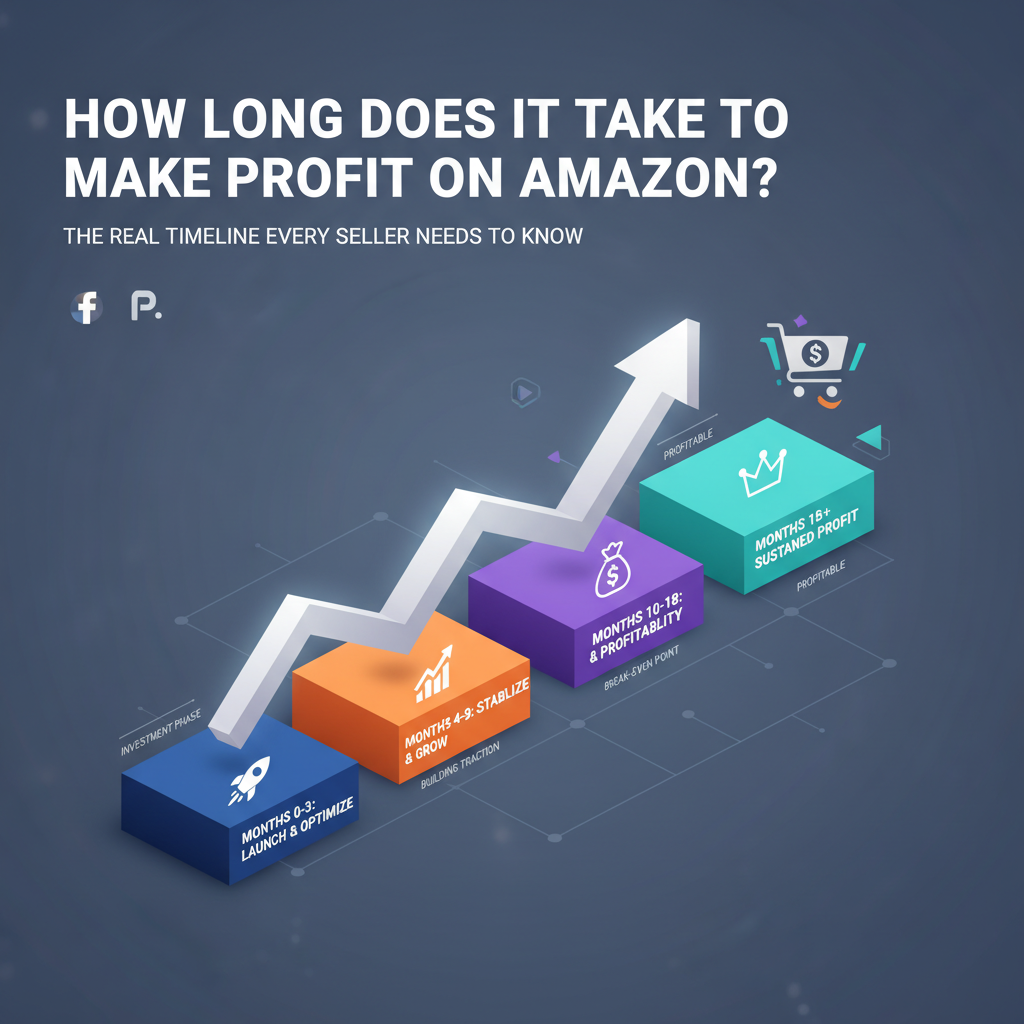
Let’s cut straight to the numbers. According to recent industry data, the majority of Amazon sellers—approximately 24%—start seeing their first profits within 3 to 6 months of launching their business. That’s a remarkably short window when you consider that traditional brick-and-mortar retail businesses often take years to reach profitability.
But here’s where it gets even more encouraging: 64% of Amazon sellers become profitable within their first 12 months. That means nearly two-thirds of people who commit to this business model see positive returns before their first anniversary as a seller.
However, there’s an important distinction to make here. “Profitable” doesn’t necessarily mean you’ve recouped your entire initial investment. Full cash break-even—where you’ve recovered all your startup costs and your inventory cycles are running smoothly—typically occurs around months 13 to 15. This is when Amazon’s payout schedules feel predictable, your inventory turnover is optimized, and you’re operating with genuine positive cash flow.
Understanding Your Break-Even Target
Smart Amazon sellers don’t just hope for profitability—they plan for it with specific targets. Industry experts recommend aiming for break-even within 90 to 120 days or after selling 200 to 400 units of your product.
Here’s a critical insight: if your calculations show that you’ll need more than 500 units to break even, that’s a red flag. It often indicates margin issues that need to be addressed before you invest further. This might mean:
- Your product sourcing costs are too high
- Your pricing strategy isn’t competitive enough
- Amazon’s fees are eating too deeply into your margins
- Your advertising spend is disproportionate to your revenue
Recognizing these warning signs early can save you thousands of dollars and months of frustration.
What Profit Margins Can You Actually Expect?
Profit margins on Amazon vary significantly based on your product category, sourcing strategy, and operational efficiency. However, the data gives us a clear picture of what’s typical.
Approximately 46% of Amazon sellers report profit margins between 11% and 25%. The overall average falls somewhere in the 10% to 20% range, though top performers can exceed this significantly while others struggle to maintain single-digit margins.
When it comes to actual earnings, the numbers are compelling:
- 40% of sellers generate between $1,000 and $25,000 per month
- This translates to annual earnings ranging from $12,000 to $300,000
- 67% of Amazon sellers achieve profitability within their first year
It’s worth noting that while break-even might come relatively quickly, some sellers report it takes up to two years before they can comfortably live off their Amazon profits. The gap between “making a profit” and “replacing your income” is significant, and your expectations should reflect this reality.
Amazon Seller Survey: How Long Does It Actually Take to Become Profitable?
Because this question comes up so often, it’s worth laying the timeline out in one place, straight from the survey data already referenced above, so you can see exactly where you should expect to land at each stage.
If you’re asking how long does it take to become profitable selling on amazon fba 6 months 12 months, the survey data is consistent: roughly a quarter of sellers hit their first profit in the 3-6 month window, and that number climbs sharply by the 12-month mark. Framed differently, the average time to become profitable amazon fba 6 months 12 months study consistently shows two clusters—an early group profitable within half a year, and a much larger group crossing into profitability by their first anniversary.
| Timeframe | What the Survey Data Shows |
|---|---|
| 3–6 Months | ~24% of sellers report their first profit |
| 12 Months | 64–67% of sellers reach profitability |
| 13–15 Months | Full cash break-even typically achieved |
| 18–24 Months | Point at which many sellers can comfortably live off Amazon income |
So when the question is phrased as amazon fba how long to become profitable 12 months 18 months typical timeline, or amazon fba how long to become profitable 6 months 12 months typical, the honest survey-backed answer sits inside that table: early wins are common by month six, majority profitability arrives by month twelve, and true break-even—where startup costs are fully recovered—tends to land in the 13-to-15-month range rather than earlier.
Sellers researching how long does it take to become profitable on amazon fba 6 months 12 months or how long does it take to become profitable on amazon fba 12 months are usually trying to set a realistic personal benchmark before they commit capital, and that’s exactly the right instinct. The amazon seller profitability timeline break even first year survey data supports treating 12 months as the median milestone, not the finish line—plenty of sellers are still optimizing operations well past that point.
For those looking further out, how long does it take to become profitable on amazon fba 12 18 months and how long does it take to become profitable selling on amazon fba 12 months 24 months both point to the same reality: reaching initial profitability and reaching a sustainable, income-replacing level of profitability are two different milestones, often separated by another 6 to 12 months of consistent operation.
Whether you found this section by searching amazon seller survey time to profitability months, survey amazon sellers time to profitability months, average time to profitability amazon fba new seller survey months, or any close variation of average time to profitability amazon fba sellers survey months, the underlying answer stays the same: expect meaningful progress by month six, expect the majority of sellers to be profitable by month twelve, and expect true break-even—amazon seller profitability timeline break even months in the fullest sense—closer to month fourteen.
Five Critical Factors That Determine Your Success Timeline
Your path to profitability isn’t random—it’s largely determined by decisions you make from day one. Here are the five factors that most significantly impact how quickly you’ll see returns:
1. Product Selection
This is arguably the most crucial decision you’ll make. Choosing products with healthy margins, reasonable competition, and consistent demand sets the foundation for everything else. A poor product choice can doom your business before it starts, while a smart selection can put you in profit territory within weeks.
2. Marketing Strategy
Amazon’s advertising platform is powerful but can quickly drain your budget if not managed properly. Effective PPC campaigns, optimized listings with strong keywords, and strategic promotional timing all contribute to faster profitability. Sellers who master Amazon advertising typically reach break-even significantly faster than those who rely solely on organic traffic.
3. Competition Level
Entering a saturated market means fighting for every sale and often competing on price—which destroys margins. Sellers who identify less crowded niches or find unique angles within competitive categories tend to achieve profitability more quickly and sustain it longer.
4. Initial Investment
Undercapitalization is one of the leading causes of Amazon business failure. Having adequate funds for inventory, advertising, and unexpected expenses gives you the runway needed to optimize your operations before cash flow becomes critical.
5. Cash Flow Management
Understanding Amazon’s payout cycles and managing inventory turnover effectively is essential. Amazon typically holds funds for up to two weeks, and inventory that sits too long ties up capital you could be using elsewhere. Mastering this balance accelerates your path to sustainable profitability.
Is Amazon FBA Still Worth It in 2025?
With increased competition and rising fees, many prospective sellers wonder if the opportunity has passed. The data says otherwise. Amazon FBA remains a viable and profitable business model in 2025, but success requires more sophistication than it did five years ago.
The key insight from current market data is this: profitability doesn’t come from chasing revenue alone. Sellers who focus obsessively on top-line sales while ignoring margins, fees, and operational efficiency often find themselves working hard for minimal returns. The winners are those who approach Amazon selling as a real business, with careful attention to product selection, cost management, and strategic marketing.
How to Accelerate Your Path to Profitability
Given everything we’ve covered, here are actionable steps to reach profitability faster:
- Conduct thorough product research before committing to any inventory purchase
- Calculate your true break-even point including all fees, shipping, and advertising costs
- Start with adequate capital—rushing in underfunded is a recipe for failure
- Monitor your margins obsessively and adjust pricing as needed
- Invest in learning Amazon’s advertising platform or hire expertise
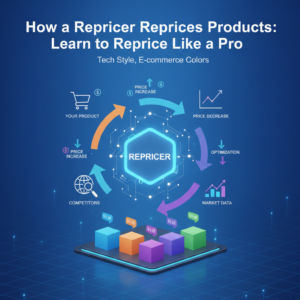
- Use repricing tools to stay competitive without sacrificing margins
The Bottom Line: Setting Yourself Up for Success
Making profit on Amazon is absolutely achievable, with most sellers reaching this milestone within their first year. However, the speed and sustainability of your success depend largely on the decisions you make and the tools you use to manage your business.
One of the most impactful decisions you can make is implementing intelligent pricing strategies. This is where Zupricer becomes an invaluable partner for Amazon sellers. Rather than manually monitoring competitors and adjusting prices—a time-consuming process that’s nearly impossible to do effectively at scale—Zupricer automates dynamic repricing to help you maintain competitive positioning while protecting your profit margins. Whether you’re just starting your Amazon journey or looking to optimize an existing operation, having the right pricing strategy can mean the difference between reaching profitability in three months versus struggling for over a year. With Zupricer handling your pricing optimization, you can focus on what matters most: growing a sustainable, profitable Amazon business.