Here’s an uncomfortable truth that many Amazon sellers avoid confronting: if you’re still treating Amazon as a place to simply list products and compete on price, you’re building on quicksand.
The sellers achieving sustainable success in 2025 aren’t playing the commodity game. They’re building genuine brands—complete with trademark protection, loyal customer bases, compelling content, and presence beyond Amazon’s walls. And the platform itself is pushing everyone in this direction.
Amazon’s algorithm now heavily favors established brands. The A10 ranking system rewards repeat purchases, branded searches, and strong customer behavior signals. Brand Registry enforcement has become more sophisticated. Amazon Marketing Cloud now offers five years of purchase data, enabling customer lifetime value analysis that was impossible just a few years ago.
The message is clear: build a brand, or watch competitors who do capture your market share.
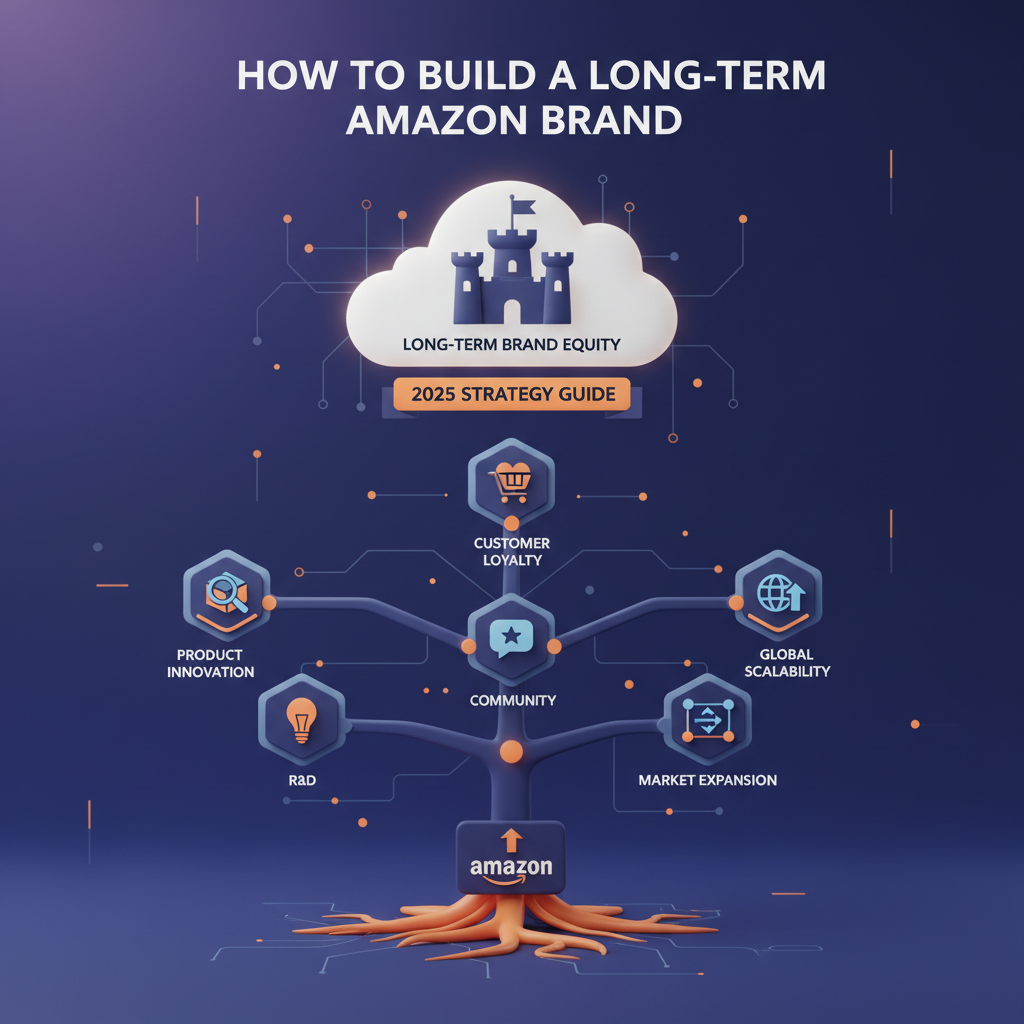
This guide breaks down the six foundational pillars of long-term Amazon brand building—and why investing in this approach is the difference between a side hustle and a genuinely valuable business asset.
Why Brand Building Has Become Non-Negotiable
Let’s start with the business case. Branded products on Amazon command 20-30% price premiums over generic alternatives. Customers willingly pay more for brands they recognize and trust. But the advantages compound far beyond pricing power.
The competitive moat brands create:
- Algorithmic preference: Amazon’s search algorithm rewards brands with strong repeat purchase rates, positive reviews, and low return rates
- Defensibility: Generic sellers face constant price wars and hijacker threats; brands with trademarks and loyal customers create barriers competitors can’t easily breach
- Customer lifetime value: Brands capturing repeat purchases generate dramatically higher profitability than transactional sellers chasing one-time sales
- Exit multiples: When selling your business, branded operations command 3-5x higher valuations than commodity product portfolios
The loyalty management market globally is projected to surpass $17.52 billion by 2026, with over 90% of companies implementing some form of loyalty or rewards program. Amazon brands that capture this repeat purchase behavior don’t just survive—they compound growth year over year.
Foundation 1: Legal Protection Through Amazon Brand Registry
Brand Registry is the gateway to everything else. Without it, you’re locked out of the tools that make professional brand building possible on Amazon.
In 2025, Amazon has made Brand Registry enforcement more sophisticated and unforgiving. The requirements are strict: you need an active, government-registered trademark that exactly matches your brand name in Amazon, owned by the same legal entity listed on your Seller Central account. Mismatches result in rejection or lost access.
What Brand Registry unlocks:
- Project Zero: Remove counterfeit listings yourself without waiting for Amazon intervention—24/7 automated self-service IP enforcement
- Transparency Program: Unique product codes verifying authenticity, ensuring customers receive only genuine products
- A+ Content: Visually rich product pages with images, comparison charts, video modules, and brand storytelling
- Brand Stores: Multi-page storefronts showcasing your entire catalog and brand narrative
- Sponsored Brand Ads: Premium advertising formats driving traffic to your Brand Store
- Brand Analytics: Data on search terms, comparison behavior, and market basket analysis
- Repeat Purchase Behavior Dashboard: Track customer retention and repeat purchases by brand and ASIN
The enrollment process requires patience—trademark registration typically takes 6-12 months through the USPTO. Start this process immediately if you haven’t already. The cost of delay compounds as competitors with registered brands gain access to tools you can’t use.
Common Brand Registry Mistakes
The most frequent rejection reason? Mismatched legal entities between trademark owner and Amazon account holder. Other pitfalls include pending (not approved) trademark applications, brand names that don’t exactly match registration, and assuming Brand Registry gives you complete listing control automatically. It provides powerful tools, but you must actively use them.
Foundation 2: Content Excellence That Tells Your Story
A+ Content and Brand Stores are where brand storytelling happens on Amazon. In 2025, these capabilities have expanded significantly—including video modules and user-generated content integration that weren’t available previously.
Creating A+ Content that converts:
- Hero imagery: Open with compelling lifestyle photography showing your product in use, creating immediate emotional connection
- Brand Story module: Share your founder journey, mission, and values—customers increasingly buy from brands they believe in
- Comparison charts: Preemptively answer “why should I buy this?” before customers navigate away to competitors
- Feature infographics: Explain key benefits in visually scannable format for mobile shoppers (over 70% of Amazon traffic)
- Video integration: Embed product demonstrations, unboxing experiences, or brand story videos directly in content
- FAQ sections: Address common questions proactively, reducing purchase hesitation
Your Brand Store represents owned real estate on Amazon—the only place you fully control the customer experience. Organize it with clear product categories, featured collections, an About Us page, and specific landing pages for external traffic campaigns. Update content seasonally to keep repeat visitors engaged.
Consistency matters enormously. Maintain cohesive visual identity and brand voice across every A+ Content page, every Brand Store section, every touchpoint. Recognition builds trust, and trust drives conversions.
Foundation 3: Customer Experience and Retention
Amazon Marketing Cloud now provides five years of purchase data, enabling sophisticated Consumer Long-Term Value (CLTV) analysis. This changes everything about how smart sellers approach their business.
The Repeat Purchase Behavior dashboard reveals which products drive loyalty versus one-time transactions, customer repurchase patterns after major events, and which new-to-brand customers convert to repeat buyers. Brands leveraging this data optimize for customer lifetime value, not just immediate ROAS.
Strategies that drive repeat purchases:
- Product quality excellence: The foundation—every disappointed customer represents lost lifetime value
- Strategic insert cards: Thank customers, provide usage tips, showcase other products, invite email signups (following Amazon’s guidelines)
- Product bundling: Create logical bundles that solve complete customer needs and introduce multiple SKUs
- Complementary product lines: Design offerings where customers who buy product A logically need product B
- Subscribe & Save: For consumable products, automate repeat purchases and lock in retention
- Review strategy: Use Amazon Vine for launches, systematically request reviews, respond professionally to negative feedback
Reviews serve dual purposes: social proof for new customers and feedback mechanism for improvement. Exceptional customer service—going above and beyond on inquiries, returns, and issues—generates organic reviews that no program can replicate.
Foundation 4: External Traffic and Multi-Channel Presence
Amazon’s Brand Referral Bonus rewards sellers driving outside traffic, with some reporting 10%+ sales growth from external strategies. But the real value extends beyond immediate commissions.
External traffic provides algorithmic boost (the A10 algorithm rewards products converting outside visitors), reduces Amazon dependency (insurance against algorithm changes), enables customer data ownership (legal email collection from your own channels), and improves unit economics (traffic you own is traffic you don’t pay Amazon for).
External traffic sources that work:
- Social media: Instagram Reels, TikTok content, Pinterest product pins, Facebook communities
- Email marketing: Build lists through your own Shopify store, lead magnets, or content marketing
- Google Ads: Target high-intent keywords driving traffic to Amazon listings or bridge pages
- Influencer partnerships: Collaborate with micro and macro influencers who authentically recommend products
- Content marketing: Create blogs and resources that rank in Google and drive organic traffic
Don’t put all eggs in the Amazon basket. True brand building requires presence across multiple channels: your own e-commerce store (where you own customer relationships completely), other marketplaces like Walmart (less saturated, growing rapidly), and potentially retail partnerships for established brands.
Amazon Attribution allows you to track which external sources drive profitable conversions. Use this data to double down on what works and cut underperforming channels.
Foundation 5: Data-Driven Decision Making
Amazon now provides brand owners with sophisticated analytics that transform data into strategic advantage—if you know how to use them.
Key metrics for long-term brands:
- Customer Lifetime Value (CLTV): Average revenue per customer over their entire relationship with your brand
- Repeat Purchase Rate: Percentage of customers making multiple purchases
- CAC to CLTV Ratio: Healthy brands maintain CLTV at least 3x higher than customer acquisition cost
- Branded Search Volume: Searches including your brand name—indicates awareness and equity
- Review Velocity: Rate of new reviews, signaling product-market fit and engagement
Brand Analytics provides search term reports showing what customers search before purchasing your products (invaluable for keyword optimization and product development), market basket analysis revealing what other products customers buy alongside yours (bundling opportunities), and competitive intelligence showing which products customers compare against yours.
Foundation 6: Community Building Beyond Amazon
Long-term brands don’t just have customers—they have communities of advocates who organically promote products without being asked.
Community building approaches:
- Social media communities: Private Facebook groups, Instagram hashtag campaigns, TikTok challenges
- User-generated content programs: Encourage customers to share photos and videos, feature their content in marketing
- Ambassador programs: Recruit passionate customers as brand advocates with exclusive access and perks
- Value-added content: Educational guides, tutorials, behind-the-scenes content, customer spotlights
Develop a consistent brand voice that comes through in every touchpoint—product descriptions, customer service, social media, email, packaging. Share authentic stories: founder journey, product development process, manufacturing transparency, customer impact. In 2025, customers increasingly support brands aligned with their values around sustainability, ethical practices, and social responsibility.
The Long Game: Building Genuine Brand Equity
Brand equity is the premium value your brand commands over generic alternatives. It manifests in higher prices customers willingly pay, loyalty that resists competitor offers, word-of-mouth recommendations, resilience during challenges, and ultimately, exit value when selling your business.
Set realistic timeline expectations. Months 1-6 focus on establishing Brand Registry, creating foundational content, and gathering initial reviews. Months 6-12 bring optimization, product line expansion, and growing external channels. Year 2 achieves repeat purchase patterns and brand recognition. Year 3+ creates dominant niche position, strong branded search volume, and a genuinely saleable asset.
Building a long-term Amazon brand requires patience and systematic execution across all six pillars. But the payoff—sustainable competitive advantage, premium pricing power, customer relationships that compound value over time—makes this investment worthwhile for any seller serious about building something lasting.
Pricing Strategy: The Brand-Building Element Most Sellers Get Wrong
Here’s what connects all six foundations: pricing strategy. Brands command premium prices, but capturing that premium requires sophisticated pricing execution that protects margins while maintaining competitiveness.
Manual repricing can’t keep pace with the dynamic Amazon marketplace. You need real-time optimization that maintains your brand positioning while winning the buy box and maximizing profitability across your entire catalog.
This is exactly where Zupricer becomes essential for brand builders. Our intelligent repricing platform helps you maintain brand-appropriate pricing—protecting the premium positioning you’ve worked to build—while automatically optimizing for Buy Box ownership and margin protection. You define your pricing floors and brand positioning; Zupricer handles the real-time adjustments that manual processes can’t match. Because building a long-term brand means every element of your Amazon operation should work together strategically—and pricing is too important to leave to guesswork.