If you’ve been selling on Amazon for any length of time, you’ve probably faced the same pricing dilemma that keeps thousands of sellers up at night: should you race to the bottom to win the Buy Box, or take a more calculated approach that protects your margins?
It’s a question that’s become increasingly critical in 2025, as competition on Amazon has reached unprecedented levels. With millions of sellers fighting for the same customers, your repricing strategies isn’t just a nice-to-have—it’s often the difference between a thriving business and one that’s slowly bleeding money.
The debate between smart repricing and aggressive repricing has been raging for years, but now we finally have compelling data to settle the argument. Spoiler alert: the winner might surprise those who’ve been stuck in the “lowest price wins” mentality.
Understanding the Two Repricing Philosophies
Before we dive into which approach actually delivers results, let’s make sure we’re on the same page about what these strategies really mean in practice.
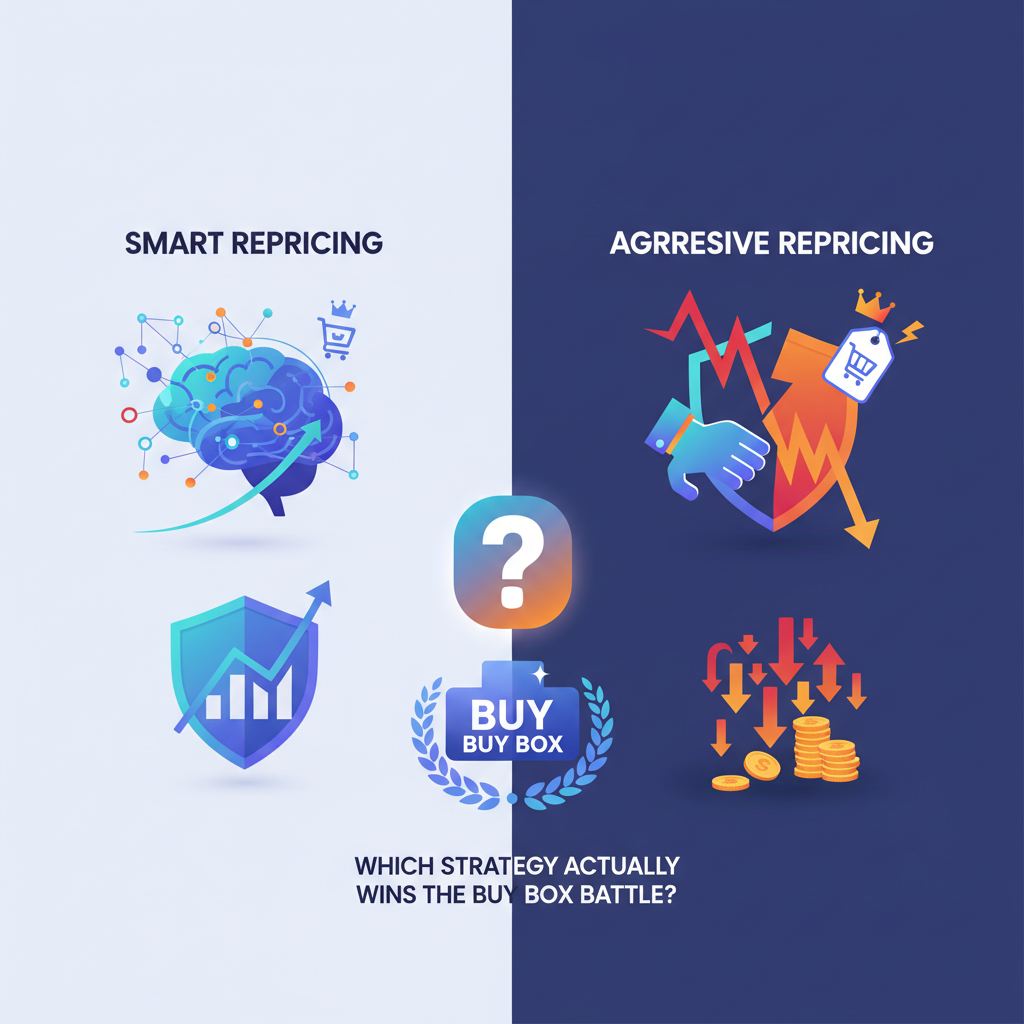
Smart repricing (also called algorithmic repricing or AI-powered repricing) uses machine learning and real-time market analysis to make pricing decisions. Think of it as having a data scientist working 24/7 to optimize your prices based on dozens of variables—not just competitor prices, but inventory levels, demand patterns, conversion rates, and even the sustainability of competitor pricing.
Aggressive repricing operates on a simpler premise: match or beat the lowest price to win the Buy Box. It’s rule-based, straightforward, and has been the go-to strategy for sellers who believe price is the only factor that matters.
The Data Doesn’t Lie: Smart Repricing Outperforms
Here’s where things get interesting. According to McKinsey data, sellers using AI-powered repricing strategies are seeing 5-10% higher profit margins compared to those relying on traditional rule-based aggressive repricing. That’s not a marginal improvement—for a seller doing $500,000 in annual revenue, that could mean an extra $25,000-$50,000 in profit.
Why such a significant difference? Smart repricing systems can do something aggressive repricers simply cannot:
- Detect when a competitor’s rock-bottom price is unsustainable and will likely increase within days
- Factor in your actual conversion rate at different price points
- Balance Buy Box ownership with profit margin protection
- Adapt to seasonal demand fluctuations automatically
- Identify optimal pricing windows based on historical performance data
The Hidden Costs of Aggressive Repricing
Aggressive repricing seems logical on the surface. Lower price equals more sales, right? Unfortunately, this approach comes with several hidden costs that many sellers don’t recognize until it’s too late.
Price wars destroy everyone’s margins. When you automatically match the lowest price, you’re essentially giving your competitors control over your profitability. One seller with deep pockets or poor cost calculations can drag an entire category’s prices into unprofitable territory.
Brand perception takes a hit. Customers aren’t as price-obsessed as many sellers assume. Frequent, dramatic price fluctuations can make your brand appear unstable or cheap. Premium buyers—often the most profitable customer segment—may avoid products with volatile pricing.
You’re leaving money on the table. Aggressive repricers often drop prices unnecessarily. If you would have won the Buy Box at $24.99 but your rule-based system dropped to $22.99 to beat a competitor, you’ve just given away $2 per unit for no reason.
When Smart Repricing Shines Brightest
Smart repricing isn’t just marginally better—it’s transformatively better in specific scenarios that most Amazon sellers encounter regularly:
- Large inventory portfolios: When you’re managing hundreds or thousands of SKUs, manual optimization is impossible. AI can handle the complexity while maintaining profitability across your entire catalog.
- Competitive categories: In crowded niches where dozens of sellers compete for the same Buy Box, intelligent algorithms can find pricing sweet spots that aggressive tools miss entirely.
- Private label products: For brands you own, protecting your price positioning is crucial. Smart repricing balances competitiveness with brand value preservation.
- Seasonal products: AI systems can anticipate demand shifts and adjust pricing proactively, rather than reacting after opportunities have passed.
Is There Ever a Place for Aggressive Repricing?
To be fair, aggressive repricing isn’t entirely without merit. There are specific tactical situations where a race-to-the-bottom approach makes sense:
- Inventory liquidation: When you need to clear aging stock before storage fees eat your profits, aggressive pricing can accelerate sales velocity.
- Market entry: Temporarily aggressive pricing can help establish sales history and reviews for new products.
- Highly commoditized products: For items where price truly is the only differentiator (think generic batteries or basic cables), aggressive repricing may be necessary to compete.
The key distinction? These are tactical applications, not strategic foundations. Using aggressive repricing as your primary strategy is like using a hammer for every home repair—sometimes it works, but often you’re just causing damage.
What Today’s Leading Repricers Tell Us About Industry Direction
The repricing tool market itself reveals where the industry is heading. Major players like BQool, Feedvisor, and SmartRepricer have all pivoted heavily toward AI-powered solutions. Even entry-level pricing tiers now include machine learning capabilities that would have been enterprise-only features just a few years ago.
This shift isn’t happening because smart repricing is trendy—it’s happening because sellers using intelligent tools are consistently outperforming those stuck with rule-based systems. The market is simply following the results.
Making the Switch: What to Expect
If you’ve been relying on aggressive repricing and you’re considering a switch to a smarter approach, here’s what you should realistically expect:
- Initial adjustment period: AI systems need data to learn your products’ optimal pricing. Give any new tool 2-4 weeks before judging results.
- Possible short-term Buy Box dips: You might temporarily lose some Buy Box share as the system finds optimal price points above rock-bottom levels.
- Margin improvements within 30-60 days: Most sellers see noticeable profit margin improvements within the first two months.
- Long-term stability: Over time, you’ll notice less pricing volatility and more predictable profitability.
The Verdict: Smart Repricing Wins—But Execution Matters
The data is clear: smart repricing outperforms aggressive repricing for the vast majority of Amazon sellers. The 5-10% margin improvement documented by McKinsey isn’t theoretical—it’s what sellers are actually experiencing when they move away from race-to-the-bottom strategies.
But here’s the catch: not all smart repricers are created equal. The best tools combine AI-powered pricing intelligence with intuitive interfaces that let you maintain control over your pricing strategy. You want technology that’s smart enough to optimize automatically but flexible enough to accommodate your specific business goals.
That’s exactly where Zupricer comes in. Built specifically for Amazon sellers who refuse to sacrifice profitability for buy box wins, Zupricer combines cutting-edge algorithmic repricing with the control and customization serious sellers demand. Whether you’re managing a handful of products or thousands of SKUs, Zupricer’s intelligent pricing engine works around the clock to maximize your margins while keeping you competitive.
Ready to stop racing to the bottom and start repricing smarter? Your profit margins will thank you.