Reprice Hub: Your Complete Amazon Repricing and Price Automation Guide
Selling on Amazon in 2026 is not for the faint-hearted. Prices shift by the minute, competitors undercut you without warning, and the Buy Box feels like a moving target. That is exactly why having a solid reprice hub strategy is no longer optional — it is the backbone of any serious Amazon seller operation. Whether you are managing 50 ASINs or 50,000, understanding how repricing works and how to automate it effectively can be the difference between thriving and just surviving on the platform.
What Is a Reprice Hub and Why Does It Matter for Amazon Sellers
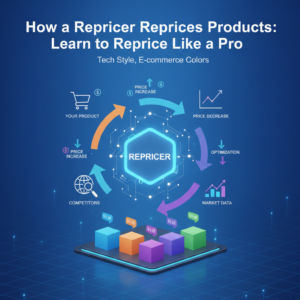
A reprice hub is essentially your central command for managing product prices across your entire Amazon catalog. Instead of manually checking each listing and adjusting prices one by one — which, let us be honest, nobody has time for — a reprice hub pulls together competitor data, Buy Box signals, and your own profit thresholds into one intelligent system.
Think of it this way: Amazon has over 350 million active product listings. Prices on popular items can change hundreds of times per day. Without a centralized repricing approach, you are basically flying blind. A proper hub gives you full visibility and control, letting you respond to market shifts before you even notice them happening.
Tools like aura repricer have been popular in the space, but sellers in 2026 are increasingly looking for smarter alternatives that go beyond simple rule-based engines. They want scenario-based strategies, profit guardrails, and real-time Buy Box intelligence — all in one place.
How Price Automation Changes the Game on Amazon
Manual pricing is slow, error-prone, and honestly exhausting. Price automation takes that burden off your plate entirely. Instead of reacting to competitor moves after the fact, automation lets your pricing system react in real time — adjusting your listings the moment market conditions change.
Here is a quick look at how manual pricing stacks up against automated pricing:
| Factor | Manual Pricing | Automated Pricing |
|---|---|---|
| Response Time | Hours or days | Real-time (seconds) |
| Accuracy | Human error risk | Data-driven precision |
| Scalability | Limited by manpower | Scales with catalog size |
| Profit Protection | Easy to overlook | Built-in guardrails |
| Buy Box Performance | Inconsistent | Consistently optimized |
The numbers speak for themselves. Sellers who switch to automated pricing typically see a measurable improvement in Buy Box win rate within the first few weeks. And when you are winning the Buy Box more consistently, your conversion rate goes up — which feeds directly into your revenue.
Understanding Amazon Store Pricing Strategies
Getting your amazon store pricing right is not just about being the cheapest option in the room. Amazon’s algorithm considers several factors when determining who gets the Buy Box — price is one of them, but so is fulfillment method, seller rating, shipping speed, and inventory availability.
The Core Pricing Strategies Sellers Use in 2026
There are a few foundational approaches that most successful sellers rely on:
- Competitive pricing — matching or slightly undercutting the lowest competitor price while maintaining your floor margin
- Buy Box targeting — specifically optimizing your price to win the Buy Box rather than just being the cheapest overall
- Velocity-based pricing — adjusting prices based on sales velocity and inventory levels to move stock efficiently
- Profit-first pricing — setting firm minimum margins and letting the repricing engine work within those boundaries
The smartest sellers are not picking just one of these — they are combining them based on product category, competition level, and business goals. That is where scenario-based repricing engines really shine, because they let you set context-specific rules rather than one blanket strategy for everything.
FBA vs FBM Pricing Considerations
Your fulfillment method also plays a role in how you should think about repricing. FBA sellers often have an edge in Buy Box eligibility due to Prime shipping, which means they can sometimes price slightly higher and still win. FBM sellers need to compensate with more aggressive pricing strategies to remain competitive. A good repricing tool should account for this distinction automatically.
How Aurora Repricer and Similar Tools Compare
The repricing tool landscape has grown significantly over the past few years. aurora repricer is one of the names that often comes up in seller communities, along with several other platforms. Choosing the right tool depends on your catalog size, the complexity of your pricing strategy, and how much control you want over your automation rules.
| Feature | Basic Repricers | Advanced Repricers (e.g., Zupricer) |
|---|---|---|
| Rule-Based Logic | Yes | Yes + scenario-based strategies |
| Buy Box Intelligence | Limited | Full real-time monitoring |
| Profit Guardrails | Basic min/max | Advanced margin protection |
| FBA + FBM Support | Sometimes | Full support for both |
| Catalog Scale | Small to mid | Enterprise-scale |
Frequently Asked Questions About Amazon Repricing
How often should my prices update on Amazon?
Ideally, your pricing tool should be monitoring and updating prices continuously — not just once or twice a day. In competitive categories, prices can shift dozens of times per hour. Real-time repricing keeps you in the game at all times.
Will automated repricing hurt my profit margins?
Only if you set it up without proper guardrails. The whole point of a solid repricing tool is that you define your minimum acceptable price, and the system never goes below that. Profit protection is built into the logic.
Is repricing only useful for high-volume sellers?
Not at all. Even smaller sellers with a few hundred SKUs can benefit massively from automation. The time savings alone are worth it, and the Buy Box gains compound over time regardless of catalog size.
What happens if two sellers are both using repricers?
This is common and the repricing engines account for it. Rather than racing to the bottom endlessly, well-configured repricers find the optimal price point where you stay competitive without destroying your margins.
Getting Started with Zupricer in 2026
If you have been manually managing prices or using a basic tool that is not giving you real Buy Box intelligence, now is the time to level up. Zupricer was built specifically for Amazon sellers who need more than just simple rule-based repricing. It combines Buy Box monitoring, profit guardrails, and a powerful scenario-based strategy engine — all designed to work seamlessly for both FBA and FBM sellers.
Rated 4.9 out of 5 on both Trustpilot and Capterra, Zupricer has earned the trust of sellers who care about protecting their margins while growing their Buy Box share. And with a 14-day free trial that requires no credit card, there is genuinely no risk in giving it a shot.
Stop leaving money on the table with outdated pricing methods. Head over to app.zupricer.com/signup and see what smarter repricing looks like in action. Your catalog — and your bottom line — will thank you.