How a Repricer Reprices Products: Learn to Reprice Like a Pro
If you’ve ever lost a sale because your price was slightly off — too high to win the Buy Box, or too low to protect your margins — you already know the pain of manual pricing. In 2026, the Amazon marketplace moves faster than ever, and sellers who rely on spreadsheets and gut instinct are getting left behind. That’s where understanding how a repricer actually works can completely change the game for your business.
How a Repricer Reprices Your Amazon Listings Automatically
Let’s break it all down — no fluff, no jargon overload. A repricing tool does what you physically cannot: it watches your competitors, reads the market signals, and adjusts your prices in real time. Think of it as your 24/7 pricing assistant that never sleeps, never gets distracted, and never forgets to check the Buy Box.
What Does It Actually Mean When a Tool Reprices a Listing?
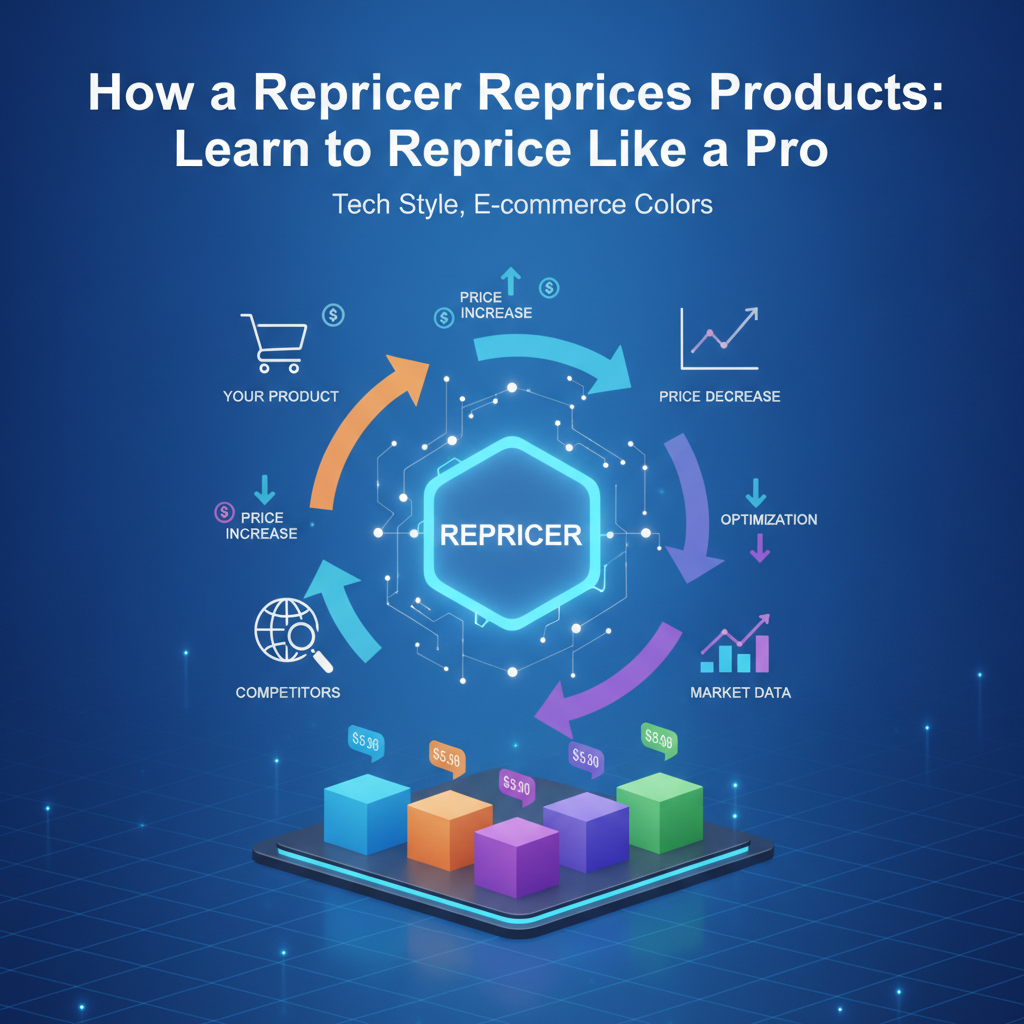
When a tool reprices a listing, it compares your current price against competitor prices, Buy Box ownership data, your set floor and ceiling prices, and your profit targets — all at once. Based on those inputs, it either raises or lowers your price to maximize your chances of winning the Buy Box while keeping your margins intact. This process can happen dozens of times a day per product, which is something no human could realistically keep up with.
The smartest tools on the market today go beyond simple price matching. They use scenario-based logic, meaning they can apply different strategies depending on whether you’re competing against FBA sellers, FBM sellers, or even Amazon itself. This kind of nuance is what separates a basic price cutter from a truly intelligent repricing system. If you’re serious about scaling, understanding the best Amazon repricer tool for dynamic repricing is a foundational step you can’t skip.
The Core Mechanics Behind Smart Repricing
Here’s how the process generally flows under the hood:
- The tool continuously monitors your competitors’ prices and Buy Box status
- It checks your predefined minimum and maximum price boundaries
- It calculates whether a price adjustment would still result in acceptable profit
- It sends the updated price to Amazon’s system via API
- Amazon reflects the new price on your listing within minutes
This loop repeats constantly. Some tools update every few minutes, while more advanced platforms can respond to market changes almost instantly. The speed matters because Buy Box eligibility is dynamic — your window of opportunity can open and close within the same hour.
| Repricing Type | Speed | Strategy Depth | Best For |
|---|---|---|---|
| Rule-Based Repricing | Moderate | Basic | Small catalogs, simple competition |
| Algorithmic / AI Repricing | Fast to Real-Time | Advanced | Large catalogs, complex competition |
| Manual Repricing | Slow | None | Not recommended for scaling |
Understanding the Amazon Prime Pricing Strategy Connection
Here’s something many sellers overlook: your repricing approach needs to align with how Amazon rewards certain seller types. A well-executed amazon prime pricing strategy takes into account that FBA sellers often have a competitive edge because Prime eligibility is a major Buy Box factor. When your repricer knows you’re FBA, it can be smarter about how aggressively it competes — because you’re already starting from a stronger position than an FBM seller offering the same price.
Applying a amazon prime pricing strategy also means you’re not racing to the bottom unnecessarily. Instead of undercutting every competitor by a fixed amount, a smart tool evaluates whether you can actually win the Buy Box at your current price before making any adjustment. This protects your profit while keeping you competitive.
Why Floor and Ceiling Prices Matter So Much
One of the biggest mistakes new sellers make is setting up a repricing tool without defining their floor price. Without a minimum price guardrail, automated tools can technically reprice you into a loss. Always calculate your true cost — including Amazon fees, shipping, storage, and returns — before setting a floor. Your ceiling price is equally important for capturing maximum value during low-competition windows.
Buy Box Intelligence: The Real Secret Weapon
Not all repricing systems understand the Buy Box equally well. The best platforms don’t just look at the lowest price — they analyze Buy Box rotation, seller ratings, fulfillment method, and historical win rates. This is what makes the difference between a tool that blindly cuts prices and one that strategically positions you to win and hold the Buy Box over time.
Sellers who leverage repricer tools with Buy Box intelligence consistently report better margins alongside higher sales volume. It’s not about being cheapest — it’s about being the most strategically priced.
Reprice Smarter: Mistakes to Avoid
- Never reprice without a minimum profit threshold set
- Avoid competing against Amazon directly with a simple undercut strategy
- Don’t use the same repricing rule across every product category
- Regularly review your repricing performance data — don’t set and forget forever
| Common Mistake | Impact | Fix |
|---|---|---|
| No floor price set | Selling at a loss | Calculate true cost and set a minimum |
| Single strategy for all SKUs | Missed opportunities | Use category-specific rules |
| Ignoring Buy Box data | Unnecessary undercutting | Use Buy Box-aware repricing logic |
Frequently Asked Questions About Repricing
How fast does a repricer update prices?
Most modern repricing tools update prices within minutes of a market change. High-quality platforms with direct API access can push updates almost in real time, giving you a significant edge over slower competitors.
Will repricing hurt my profit margins?
Only if you don’t set proper guardrails. With floor prices and profit-based rules in place, a good repricing system actually protects and often improves your margins by winning the Buy Box more frequently without unnecessary price drops.
Is repricing only for large sellers?
Not at all. Even small sellers with a handful of ASINs benefit from automated repricing. It saves time, reduces human error, and keeps you competitive around the clock — regardless of catalog size.
What’s the difference between rule-based and algorithmic repricing?
Rule-based repricing follows fixed instructions you create, like “always be $0.05 below the lowest FBA price.” Algorithmic repricing uses data patterns and machine learning to make smarter decisions dynamically, often resulting in better outcomes at scale.
Why Zupricer Is Built for Sellers Who Want to Reprice Smarter
Zupricer is an Amazon reprices engine designed from the ground up for sellers who are serious about growth. It combines Buy Box intelligence, profit guardrails, and a scenario-based strategy engine to automate repricing across your entire catalog. Whether you’re FBA or FBM, Zupricer monitors competitor prices, Buy Box status, and real-time market conditions — then adjusts your prices automatically to keep you winning without sacrificing the margins you worked hard to build.
With a 4.9/5 rating on both Trustpilot and Capterra in 2026, Zupricer has proven itself as a reliable partner for Amazon sellers at every scale. And the best part? You can try it completely free for 14 days — no credit card required. If you’re ready to stop guessing and start pricing with precision, head over to app.zupricer.com/signup and see what smart repricing can do for your business.