Here’s a statistic that should make you uncomfortable: in 92% of the top 500 Amazon keywords, the number-one ranked product isn’t the one generating the most revenue. That means the vast majority of sellers are benchmarking themselves against the wrong competitors and tracking the wrong metrics entirely.
The gap between successful Amazon sellers and everyone else has never been wider—and it has nothing to do with access to data. Every seller has the same Business Reports in Seller Central. The difference lies in what top performers track, how they interpret what they see, and how quickly they act on insights.
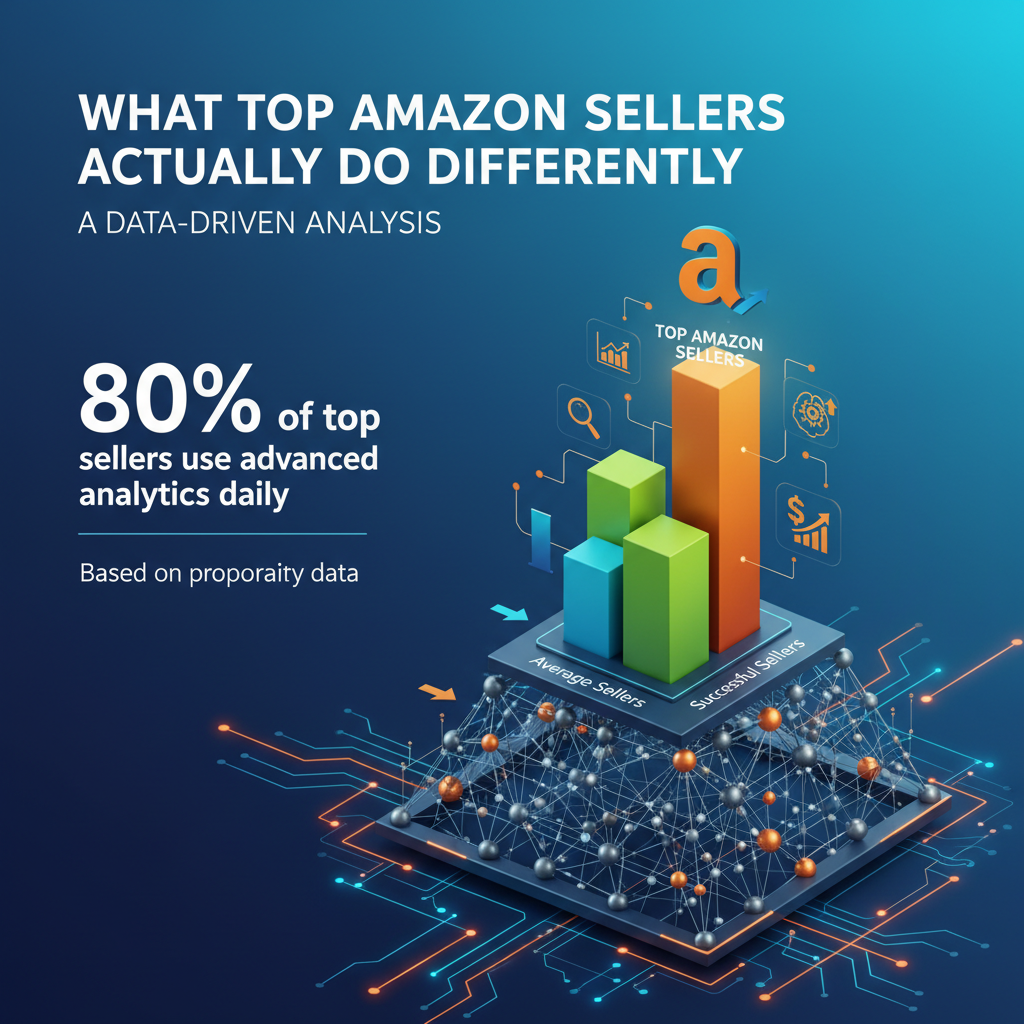
After analyzing patterns from high-performing sellers, we’ve identified a clear divide: average sellers obsess over vanity metrics that feel good but don’t drive results, while top performers focus laser-sharp attention on a smaller set of actionable metrics that directly impact profitability. The findings are eye-opening—and actionable.
The Vanity Metrics Trap: What Average Sellers Get Wrong
Before diving into what works, let’s address the metrics that waste your time and attention:
Total Review Count
Average sellers believe more reviews automatically mean more sales. Top sellers know better. Research shows you can outrank a product with 5,000 reviews if your listing is stronger and your conversion rate is higher. Review velocity and star rating trends matter far more than accumulating a large total count.
Revenue Rankings and BSR
Best Seller Rank feels validating, but it’s largely meaningless for strategic decisions. Revenue doesn’t equal profit or market dominance. Top sellers focus on brand share within their specific niche and profitability metrics instead.
Raw Impression Counts
Millions of impressions with zero sales is still zero sales. Impressions without clicks and conversions represent wasted visibility, not success. Click-through rate and conversion rate tell the real story.
The Metrics That Actually Matter: Conversion and Performance
Top performers obsess over a core set of metrics that directly impact their bottom line. Here’s where they focus:
Conversion Rate: The Ultimate Success Indicator
Higher conversion means lower ad costs, stronger rankings, and better ROI. Amazon rewards consistent, repeatable sales—that’s what pushes you up the rankings.
The benchmarks:
- Average Amazon conversion rate: 10-15%
- Top performer conversion rates: 18-25%
- Category variations are significant (high-ticket vs. low-ticket)
What top sellers do differently:
- Track conversion rate by traffic source (organic vs. PPC)
- A/B test listing elements systematically
- Monitor conversion rate daily, act on trends weekly
- Calculate conversion rate impact on ad efficiency
Here’s the compound effect most sellers miss: a product converting at 20% vs. 10% can price 8-10% higher while maintaining Buy Box competitiveness. Amazon’s algorithm factors conversion into Buy Box eligibility, creating direct pricing power from conversion optimization.
Sales Velocity: The Ranking Engine
Sales velocity—how quickly and consistently your product sells—remains the most influential ranking factor in Amazon’s A9 algorithm. Top sellers track units sold per day, consistency of sales, trend direction, and velocity relative to category norms.
The key insight: velocity compounds. Higher velocity improves ranking, which increases organic traffic, which increases velocity further. Breaking this cycle through stockouts or aggressive price increases requires weeks to rebuild.
Click-Through Rate (CTR)
CTR directly impacts organic ranking by signaling to Amazon that your product is relevant for search queries. Top performers achieve 0.8-1.2% CTR compared to the 0.3-0.5% average. They invest heavily in main image optimization, A/B test titles for click appeal, and optimize specifically for mobile CTR—which performs differently from desktop.
Profitability Metrics: Where Real Money Is Made or Lost
TACoS: The True Advertising Efficiency Metric
While average sellers obsess over ACoS (ad spend ÷ ad-attributed revenue), top performers track TACoS (total ad spend ÷ total revenue). The distinction is critical: TACoS reveals whether your organic ranking is improving and whether your business is sustainable.
Healthy TACoS progression looks like this:
- Launch phase: 40-60% (investment period)
- Growth phase: 25-35% (building organic)
- Mature phase: 10-20% (organic dominance)
A product with 30% ACoS but 12% TACoS is actually healthier than one with 20% ACoS and 25% TACoS. The first has strong organic sales; the second is completely PPC-dependent.
True Unit Economics
Most sellers track revenue or gross margin but miss hidden costs entirely. Top performers calculate profit per unit after ALL costs: COGS, shipping, FBA fees, storage allocation, referral fees, advertising cost allocation, return rate factors, and aged inventory fees.
The revelation: many sellers operating on 10-20% gross margins discover they’re actually at 5-10% net margins after accounting for all costs. Some “profitable” products are literally losing money on every sale.
Inventory Performance Index (IPI)
Amazon’s composite score measuring inventory health determines storage limits and impacts fees. Scores below 450 trigger restrictions. Top sellers maintain IPI above 550 consistently by addressing stranded inventory within 24 hours, forecasting demand to avoid overstocking, and using IPI as a direct input for procurement decisions.
Market Intelligence: Understanding Your Real Competition
Brand Share vs. Market Share
Remember that 92% statistic? Top sellers track brand share—their position within their specific product vertical—rather than overall market share. They benchmark against brand leaders, not revenue leaders, because those are the listings that actually matter for competitive positioning.
Review Velocity and Sentiment
Not total reviews—review velocity and sentiment trends. Research shows 79% of top Amazon sellers use customer feedback tools to fine-tune their products and listings. They analyze reviews weekly (not monthly), categorize negative reviews by issue type, and use feedback as free product development research.
Buy Box Percentage
Amazon considers price, availability, seller rating, and sales velocity when assigning the Buy Box. Top sellers monitor Buy Box percentage daily, investigate immediately when it drops, and use automated repricing to defend their position while protecting margins.
The Six Strategies That Separate Winners From Everyone Else
Strategy 1: Dynamic Pricing Based on Real-Time Data
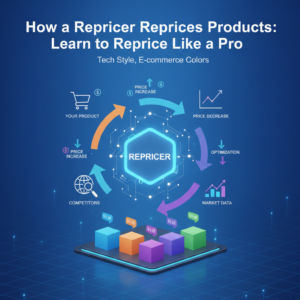
Average sellers set prices manually and adjust weekly or monthly. Top sellers implement repricing based on competitor movement, inventory-aware pricing where stock levels trigger price changes, and margin protection floors with dynamic ceilings.
Results: 3-5% margin improvement, Buy Box win rate increases of 15-25%, and 80% reduction in manual pricing time.
Strategy 2: Full-Funnel PPC Analytics
While average sellers manage campaigns only in Amazon Ads Console, top performers integrate Amazon Attribution data with external analytics platforms for full-funnel visibility. They track customer journeys from external sources to Amazon and optimize ad spend based on complete customer lifetime value.
Strategy 3: Predictive Inventory Forecasting
Rather than reordering reactively when inventory gets low, top sellers use predictive demand forecasting with historical data, seasonal trend analysis, lead time buffers, and safety stock optimization. The payoff: stockout prevention (which maintains ranking), reduced storage fees, and better cash flow.
Strategy 4: Systematic Customer Feedback Mining
Top sellers treat reviews as product development research. They analyze feedback weekly, cluster negative reviews to identify common issues, and build product improvement roadmaps based on customer voice. Each addressed complaint creates competitive differentiation.
Strategy 5: Data-Driven Bundle Optimization
Instead of creating bundles based on intuition, top sellers analyze “Frequently Bought Together” data, test combinations systematically, and measure bundle conversion versus individual items. Result: 8-12% higher margins on bundles with reduced direct competition.
Strategy 6: Post-Purchase Lifecycle Marketing
For average sellers, the transaction ends at purchase. Top sellers implement post-purchase engagement through product usage education, cross-sell sequences, and compliant review generation. They track customer lifetime value by cohort and optimize for repeat purchases, achieving 2-3x customer lifetime value.
The Behavioral Patterns That Define Top Performers
Beyond specific metrics, top sellers exhibit distinct behavioral patterns:
Obsessive focus on few metrics: They track 8-12 core metrics religiously and act immediately on deviations, rather than tracking everything and acting on nothing.
Speed of decision-making: Daily monitoring, weekly adjustments, monthly strategy shifts. A conversion rate drop addressed in days versus weeks prevents thousands in lost revenue.
Systematic testing culture: Always 2-3 active A/B tests running, testing one variable at a time, with minimum two-week duration and statistical significance requirements.
Ruthless elimination: Kill unprofitable products quickly and reinvest in winners. The 80/20 rule applies: 20% of products generate 80% of profit. Top sellers double down on winners and exit losers without emotional attachment.
Integrated system thinking: Understanding that pricing affects conversion, which affects ranking, which affects organic traffic, which affects TACoS. All systems interact—optimizing each independently misses the bigger picture.
Common Mistakes That Keep Sellers Stuck
- Data hoarding without action: Collecting data without changing behavior creates zero value
- Vanity metric obsession: Focusing on feel-good numbers that don’t impact profit
- Analysis paralysis: A good decision now beats a perfect decision later
- Tool overload: Too many tools without integration creates fragmented, unusable data
- Ignoring leading indicators: By the time sales drop, the damage is done; conversion rate and traffic predict future performance
Turning Data Into Action: The Path Forward
The data is available to everyone. The difference is what you do with it—and how quickly you act. Top sellers succeed because they’ve built systems that monitor the right metrics, trigger appropriate actions, and execute faster than competitors can react.
Manual management of pricing, inventory, and competitive positioning simply can’t keep pace with today’s marketplace dynamics. The sellers winning in 2025 have automated the execution while maintaining strategic oversight.
This is exactly the problem Zupricer solves. Our platform transforms the data-driven strategies top sellers use—dynamic pricing based on real-time competitive intelligence, inventory-aware price adjustments, margin protection floors, and Buy Box optimization—into automated systems that work 24/7.
Instead of manually monitoring dozens of SKUs, reacting to competitor price changes hours or days late, and hoping your pricing strategy holds up, Zupricer gives you the same execution speed that separates top performers from everyone else. The metrics matter—but only if you can act on them fast enough. Zupricer makes that possible.