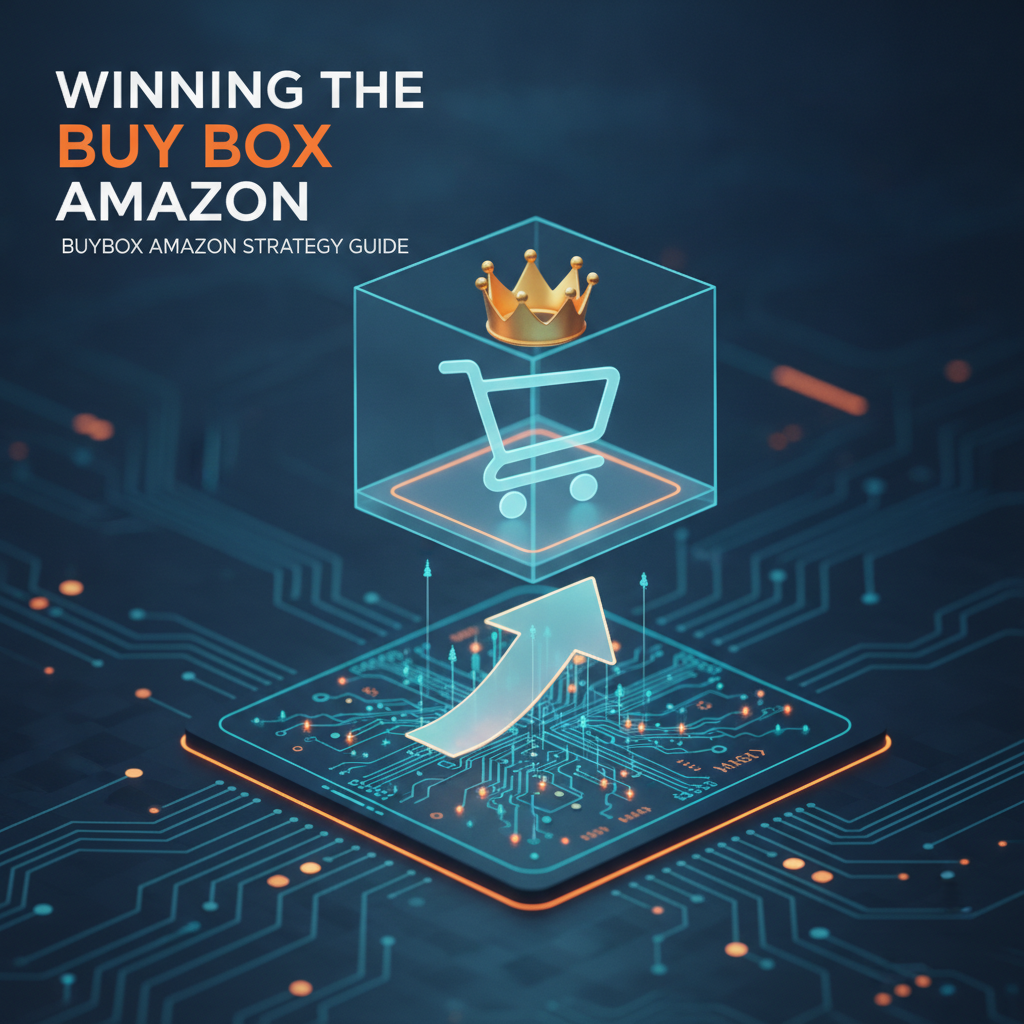
Winning the Buy Box Amazon: Your Complete BuyBox Amazon Strategy Guide for 2026
Have you ever wondered why some Amazon sellers seem to dominate sales while others struggle to get noticed? The answer almost always comes back to one thing — the Buy Box. If you’re serious about growing your Amazon business, understanding and winning the buy box amazon is not optional. It’s survival.
But here’s the real question — do you actually know what it takes to land that coveted featured offer spot consistently? Because the rules have changed, the competition has intensified, and in 2026, the game is more complex than ever before. Let’s break it all down.
What Exactly Is the BuyBox Amazon and Why Should You Care?
The Buy Box is the “Add to Cart” button featured on an Amazon product page. When multiple sellers offer the same product, Amazon algorithmically selects one seller to feature in that prime position. Research consistently shows that over 80% of all Amazon purchases happen through the Buy Box — which means if you’re not in it, you’re essentially invisible to the majority of shoppers.
So what determines who gets it? Amazon evaluates a combination of factors including price competitiveness, fulfillment method, seller metrics, delivery speed, and inventory availability. No single factor guarantees your spot — it’s a constant balancing act, and that’s exactly what makes it so challenging.
Understanding how buy box wins amazon are calculated is the foundation of any effective pricing strategy. Without that understanding, you’re essentially flying blind.
How Do You Win the BuyBox on Amazon in 2026?
If you’re asking yourself how do you win the buybox on amazon, you’re already ahead of sellers who don’t even realize they’re losing it. Here’s what actually matters right now:
- Competitive pricing relative to other sellers on the same ASIN
- Fulfillment method — FBA still carries significant weight, but FBM sellers can compete with the right strategy
- Seller feedback score and account health metrics
- Delivery speed and shipping reliability
- Inventory depth and consistency
- Order defect rate and late shipment rate
The tricky part? Amazon doesn’t tell you exactly how each factor is weighted. It shifts constantly. That’s why reactive sellers who manually update prices once a day are already falling behind sellers who use automated tools to respond in real time.
| Factor | Impact Level | FBA Advantage | FBM Viable? |
|---|---|---|---|
| Price Competitiveness | Very High | Moderate | Yes |
| Fulfillment Method | High | Strong | With SFP |
| Delivery Speed | High | Strong | Limited |
| Seller Feedback Score | Moderate | Neutral | Yes |
| Inventory Availability | Moderate | Neutral | Yes |
The New Challenges Sellers Face When Winning the Buy Box
The Amazon marketplace in 2026 looks very different from what it was just a couple of years ago. Two major developments are reshaping how sellers approach their pricing strategies — and both have serious implications for anyone focused on winning the buy box consistently.
First, Amazon’s newer discount ecosystem has introduced an entirely different layer of price pressure for budget-category sellers. With ultra-low-priced goods flooding certain categories through direct-from-supplier channels with longer delivery times, traditional Buy Box mechanics are being bypassed in ways that weren’t possible before. If you’re selling in lower price-point categories, your pricing strategy needs to account for this new competitive dynamic — or you’ll find your margins squeezed without even realizing why.
Second, Amazon has tightened its Seller Fulfilled Prime requirements significantly. Sellers who use merchant fulfillment and want to retain their Prime badge now need to support weekend shipping — both Saturday and Sunday — along with faster delivery speed benchmarks. FBM sellers who can’t meet these mandates risk losing their Prime status entirely, which directly tanks their Buy Box eligibility. For many small and mid-sized sellers, this is a real operational challenge that directly affects their buy box wins amazon rate.
Should FBM Sellers Be Worried?
Honestly? Yes — but it’s manageable. The key is adjusting your pricing strategy around your fulfillment limitations. If your Buy Box visibility drops over weekends due to fulfillment constraints, compensating with smarter price positioning during high-traffic windows can help offset that visibility loss. This is exactly the kind of nuanced, condition-based strategy that separates serious sellers from casual ones.
How Amazon’s SP-API Updates Are Changing the Repricing Game
Here’s something that doesn’t get talked about enough — the infrastructure behind repricing tools has gotten significantly more powerful in 2026. Amazon recently introduced a new batch endpoint within its Selling Partner API that allows repricing software to pull Buy Box pricing, competitive thresholds, and reference prices for multiple products simultaneously. This drastically reduces the latency and throttling issues that previously slowed down real-time price updates.
What does that mean for you? It means that amazon buy box software built on top of these newer API capabilities can now react to price changes faster and more accurately than ever before. If you’re using an outdated repricing tool — or worse, doing it manually — you’re now competing against sellers whose prices adjust in near real time based on live market data.
Why Manual Repricing Simply Doesn’t Cut It Anymore
Think about it this way — if your competitor’s repricing tool is pulling live Buy Box data every few minutes and yours updates once a day, who do you think Amazon’s algorithm is going to favor? Speed and accuracy in pricing matter enormously, and the technological gap between manual sellers and automated ones is only widening.
What to Look for in a Repricing Tool
- Real-time competitor price monitoring
- Profit floor and ceiling guardrails to protect margins
- Buy Box status tracking across your full catalog
- Condition-based and scenario-based rule building
- Support for both FBA and FBM fulfillment models
- Transparent API integration with minimal throttling
| Repricing Method | Speed | Accuracy | Margin Protection | Buy Box Win Rate |
|---|---|---|---|---|
| Manual Repricing | Slow | Low | Inconsistent | Low |
| Basic Automated Tools | Moderate | Moderate | Limited | Moderate |
| Advanced AI Repricers | Real-Time | High | Strong | High |
What Is the Amazon Buy Box and How to Win It: Tying the Strategy Together
Stepping back from the API mechanics covered above, it’s worth answering the question in the plainest terms possible: what is the amazon buy box and how to win it, once and for all? The Buy Box is the featured “Add to Cart” spot on a shared listing, and winning it consistently comes down to the same three pillars this guide keeps circling back to — competitive pricing, reliable fulfillment, and continuous monitoring that reacts faster than a competitor’s next move.
The piece that ties all three together in practice is having a genuine buy box optimization software layer sitting underneath your catalog — not a tool that just matches the lowest price on the page, but one that’s actively balancing price competitiveness against your profit floor while accounting for the fulfillment and delivery-speed factors covered earlier. Without that layer, you’re stuck doing manually what the SP-API improvements above were specifically built to automate.
FAQ: Winning the Buy Box on Amazon
Does having the lowest price guarantee the Buy Box?
No — and this is one of the biggest misconceptions sellers have. While price is a major factor, Amazon also weighs fulfillment method, delivery speed, seller metrics, and inventory availability. Pricing too low can actually hurt your profitability without guaranteeing the Buy Box, which is why margin-aware automated repricing is so important.
Can FBM sellers win the Buy Box in 2026?
Yes, but it’s harder than it used to be. With Amazon’s tightened Seller Fulfilled Prime requirements, FBM sellers need to be more strategic about pricing, especially during periods when their fulfillment capabilities are limited. Compensation through smarter pricing during high-visibility windows is one effective approach.
How often should I update my prices?
In today’s competitive environment, price updates should ideally happen in real time or near real time. Manual updates once or twice a day leave too much ground uncovered. Using amazon buy box software that monitors competitor pricing continuously gives you a meaningful competitive edge.
What’s the role of feedback score in Buy Box eligibility?
Your seller feedback score is one of Amazon’s trust signals. A score below 95% can start to negatively impact your Buy Box win rate, even if your pricing is competitive. Maintaining strong customer service and proactively managing your feedback profile is a non-negotiable part of any Buy Box strategy.
Putting It All Together: Your 2026 Buy Box Strategy
So where does this leave you? The path to consistently how do you win the buybox on amazon in 2026 involves three core pillars — smart pricing, reliable fulfillment, and continuous monitoring. None of these work in isolation. A brilliant price means nothing if your delivery metrics are poor. Great fulfillment means nothing if you’re consistently priced out of the featured offer range.
The sellers who are thriving right now are the ones who treat the Buy Box as a dynamic, ongoing strategy rather than a one-time setup. They use data, automation, and real-time intelligence to stay competitive without constantly racing to the bottom on price.
And the good news? You don’t need a massive team or a huge budget to do this. The right tools level the playing field considerably.
Ready to Start Winning the Buy Box Amazon with Zupricer?
If you’re serious about improving your buy box wins amazon rate without sacrificing your margins, Zupricer was built exactly for that. As an Amazon repricing tool designed specifically for Amazon sellers, Zupricer combines Buy Box intelligence, profit guardrails, and a scenario-based strategy engine to automate repricing across your entire catalog at scale.
Whether you’re FBA or FBM, Zupricer continuously monitors competitor prices, Buy Box status, and shifting market conditions to automatically adjust your prices in real time. No guesswork, no manual updates, no margin disasters — just smarter, faster repricing that keeps you competitive around the clock.
Rated 4.9/5 on Trustpilot and Capterra, and trusted by sellers across the globe, Zupricer is the kind of amazon buy box software that pays for itself quickly. Best of all? You can start with a 14-day free trial — no credit card required. Head over to app.zupricer.com/signup and see for yourself what real Buy Box intelligence feels like.
Understanding Order Defect Rate and Its Impact on Buy Box Eligibility
One of the most critical yet often overlooked factors in winning the buy box amazon is your Order Defect Rate (ODR). Amazon requires sellers to maintain an ODR below 1% to remain in good standing and eligible for the Buy Box. This metric combines three key components: negative feedback rate, A-to-Z Guarantee claims, and credit card chargebacks. Even a small spike in any of these areas can quickly push you over the threshold and trigger Buy Box suppression.
What makes ODR particularly challenging is that it’s a lagging indicator. By the time you notice your buybox amazon win rate dropping, the damage has already been done. A single wave of defective products, shipping delays, or customer service issues can take weeks to resolve in your metrics, during which your Buy Box eligibility remains compromised. This is why proactive monitoring of your account health dashboard is essential, not optional.
How to Recover Buy Box Eligibility After Losing It
Losing Buy Box eligibility feels catastrophic, but recovery is possible with the right approach. The first step is identifying the root cause through your Seller Central account health page. Are you dealing with elevated ODR, late shipment rate above 4%, or cancellation rate exceeding 2.5%? Each issue requires a different remediation strategy.
For ODR issues, focus on improving product quality control and customer communication. Proactively reach out to customers who might be dissatisfied before they leave negative feedback or file claims. For late shipment problems, audit your fulfillment process and consider switching high-volume SKUs to FBA if merchant fulfillment is creating bottlenecks. Cancellation rate issues often stem from inventory management failures, so implementing better stock monitoring prevents overselling.
The recovery timeline typically spans 30 to 60 days, as Amazon calculates these metrics on a rolling basis. During this period, maintaining flawless performance on new orders is critical. Even one additional defect can extend your recovery window significantly. Many sellers make the mistake of aggressive repricing during recovery, but without Buy Box eligibility, lower prices simply erode margins without driving proportional sales increases.
Buy Box Suppression: What Triggers It and How to Avoid It
Beyond losing eligibility entirely, sellers also face Buy Box suppression, where Amazon temporarily removes the Buy Box from a listing altogether. Common triggers include pricing significantly above recent selling history, suspected price gouging during high-demand periods, listing quality issues, and restricted product violations. According to Amazon’s official seller guidelines, suppression can occur even when you’re the only seller on a listing if Amazon’s algorithm detects pricing anomalies.
The most frustrating aspect of suppression is the lack of transparency. Amazon rarely provides specific explanations, leaving sellers to diagnose the issue through trial and error. If your buy box wins amazon suddenly drop to zero across multiple ASINs simultaneously, suppression is likely the culprit rather than competitive factors.
Prevention requires maintaining pricing within reasonable ranges of your historical averages and market benchmarks. Sudden price increases of 30% or more, especially during crisis events or seasonal peaks, frequently trigger algorithmic flags. Using amazon buy box software with built-in suppression detection helps identify at-risk listings before they lose visibility entirely.
Seasonal Pricing Strategies for Maintaining Buy Box During Peak Periods
Q4, Prime Day, and other peak selling periods present unique Buy Box challenges. Demand surges, competitor inventory fluctuates wildly, and Amazon’s algorithm becomes more sensitive to delivery speed and stock availability. Sellers who maintain static pricing during these windows consistently lose ground to those with dynamic strategies.
The key is balancing price optimization with inventory protection. During Prime Day, for example, running out of stock means losing not just immediate sales but also the algorithmic momentum that comes from sustained Buy Box ownership. Smart sellers using what is the amazon buy box and how to win it strategies increase prices gradually as inventory depletes, maximizing revenue per unit while extending stock longevity.
Conversely, the post-holiday period requires aggressive repricing to clear excess inventory before long-term storage fees kick in. This is where buy box optimization software proves invaluable, automatically adjusting pricing based on inventory levels, competitor activity, and seasonal demand patterns without constant manual intervention.