Dynamic Repricing: Your Ultimate Pricing Tool & Pricer System
Competing on Amazon in 2026 means dealing with price changes happening every few minutes across thousands of sellers. If you are still setting prices manually or relying on outdated rule-based logic, you are already falling behind. The sellers winning the Buy Box consistently are the ones who have invested in smart automation — and that starts with understanding what dynamic repricing actually does for your business.
This is not just about dropping your price lower than everyone else. That strategy burns your margins fast and leads nowhere good. Real repricing intelligence means knowing when to go lower, when to hold, when to go higher, and how to do all of that automatically while staying compliant with Amazon’s evolving policies.
The Ultimate Dynamic Repricing, Pricing Tool & Pricer System Guide
Let’s get into the nuts and bolts of how this all works — and why 2026 is genuinely a turning point for Amazon sellers who take pricing seriously.
How Dynamic Repricing Works and Why It Matters
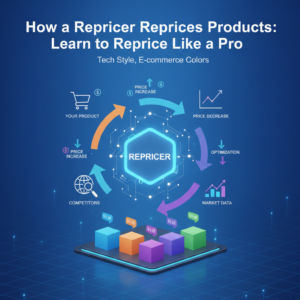
At its simplest, amazon dynamic pricing is the practice of automatically adjusting your product prices in response to real-time market signals. Those signals include competitor price changes, Buy Box ownership shifts, your own inventory levels, and broader demand patterns. A well-built system processes all of this simultaneously and makes adjustments within seconds, not hours.
What makes this so critical right now is that Amazon itself is becoming far more sophisticated on the pricing side. For example, Amazon recently introduced a new SP-API parameter called the Minimum Declared Price, or MDP. This acts as an automated floor in the system, designed to protect brand equity and stop the kind of downward pricing spiral that used to wipe out margins across entire product categories. For sellers, this means your repricing engine needs to be aware of and aligned with these compliance boundaries — otherwise you risk listing suppressions or policy flags that can tank your visibility overnight.
If you want a solid breakdown of how top repricers handle these challenges, this guide on the best Amazon repricer tool for dynamic repricing covers exactly what to look for in a modern solution.
| Repricing Approach | Speed | Margin Protection | Policy Compliance | Scalability |
|---|---|---|---|---|
| Manual Pricing | Very Slow | Risky | Seller Dependent | Poor |
| Basic Rule-Based Repricer | Moderate | Limited | Partial | Moderate |
| Dynamic AI-Powered Repricer | Real-Time | Strong | Automated | Excellent |
Choosing the Right Pricing Tool for Your Amazon Store
Not every repricing solution is built for where Amazon is heading. Some tools were designed years ago and have not kept pace with the platform’s increasing complexity. When evaluating a pricing tool, there are a few things you absolutely need to check before committing.
First, does it support both FBA and FBM sellers? These two fulfillment models have different Buy Box dynamics, and a tool that only optimizes for one will leave gaps in your strategy. Second, does it incorporate predictive signals? Amazon is currently piloting a machine learning forecasting model that predicts external price drops on retail channels like Walmart and Target — sometimes hours before they actually occur — and uses that data to preemptively shift its Competitive Price Threshold. A purely reactive repricing tool that only responds after a change has already happened puts you at a constant disadvantage.
- Real-time Buy Box monitoring across your full catalog
- Minimum and maximum price guardrails to protect margins
- Compliance with Amazon’s MDP and SP-API parameters
- Predictive pricing capabilities beyond reactive adjustments
- Support for both FBA and FBM fulfillment models
- B2B pricing rules for enterprise and corporate account targeting
Frequently Asked Questions About Repricing
- What is dynamic repricing on Amazon? It is the automated, real-time adjustment of your product prices based on competitor activity, Buy Box signals, and market conditions.
- Will repricing hurt my profit margins? Not if it is set up correctly. Proper minimum price floors ensure you never sell below your acceptable threshold.
- Does Amazon allow automated repricing? Yes, as long as it complies with Amazon’s pricing policies, including newer parameters like the Minimum Declared Price.
- What is B2B repricing on Amazon? It refers to customized pricing for high-volume enterprise buyers using Amazon’s B2B Pricing API, allowing targeted contract-based pricing rather than generic tiers.
- How do I know if a repricer is keeping up with Amazon’s changes? Look for tools that actively update their engines in response to Amazon’s SP-API changes and publish transparent roadmap updates.
What a Modern Pricer System Should Handle in 2026
The expectations for a reliable pricer system have risen considerably this year. Beyond basic price matching, sellers now need systems that can navigate Amazon’s increasingly layered pricing environment. One area that is genuinely underexplored is B2B pricing. Amazon launched an updated B2B Pricing API endpoint in 2026 that allows sellers to automate personalized contract-based pricing for specific high-volume enterprise accounts, moving away from the one-size-fits-all tier structure that used to be the norm. Sellers using repricers that support this capability are quietly picking up corporate procurement contracts that their competitors are completely missing.
This is also where tools like repriceit show their limitations — older platforms were not built with B2B contract logic in mind, and retrofitting that capability is not straightforward. Modern solutions architect these features from the ground up.
| Feature | Older Repricers | Zupricer |
|---|---|---|
| MDP Compliance | Not Supported | Integrated |
| Predictive Price Signals | No | Yes |
| B2B Contract Pricing | No | Yes |
| FBA + FBM Support | FBA Only | Both |
| Free Trial | Varies | 14-Day, No Credit Card |
Testing Before You Commit
One of the smartest moves any Amazon seller can make before choosing a repricing platform is to take advantage of a free trial period. An amazon repricing tool free trial lets you see actual performance data against your real catalog before spending a single dollar. You get to test how the system handles Buy Box competition, whether the interface makes sense for your workflow, and how responsive the support team is when questions come up.
For sellers managing large catalogs, even a small percentage improvement in Buy Box ownership translates into meaningful revenue gains. That makes the evaluation period genuinely valuable rather than just a formality. A well-structured trial should give you enough data across multiple ASINs to make an informed decision with confidence.
Staying Ahead as Amazon’s Pricing Environment Evolves
The Amazon marketplace is not standing still, and neither are the tools designed to help you compete in it. Between the MDP safeguards, the predictive competitor pricing engine being rolled out, and the expanded B2B API capabilities, sellers who stay informed and use tools that evolve alongside Amazon are the ones building sustainable, scalable businesses. Reactive strategies will always be playing catch-up. Proactive, intelligence-driven repricing is where the advantage lives.
For a deeper look at how the leading solutions compare and what features matter most when selecting your platform, check out this resource on Amazon repricing tools for dynamic pricing in 2026 — it breaks down exactly what separates good from great.
Start Repricing Smarter With Zupricer
Zupricer was built from the ground up for Amazon sellers who want to compete seriously without spending hours buried in spreadsheets. It combines real-time Buy Box intelligence, automated profit guardrails, and a scenario-based strategy engine that adapts to your catalog at scale. Whether you are running FBA, FBM, or both, Zupricer handles it all — and with a 4.9 out of 5 rating on both Trustpilot and Capterra, the results speak for themselves.
There is a 14-day free trial waiting for you with no credit card required. Head over to Zupricer, sign up today, and see what smarter repricing does for your Buy Box win rate and your bottom line starting from day one.
Common Repricing Mistakes That Destroy Amazon Profits
Even with the best amazon repricing tool in place, sellers frequently make critical errors that undermine their entire pricing strategy. Understanding these mistakes is essential for anyone serious about maintaining healthy margins while staying competitive.
The Race to the Bottom: Why Undercutting Always Backfires
One of the most damaging mistakes is setting no minimum price floors. When your pricer system lacks proper guardrails, it will chase competitors downward indefinitely, eroding margins by 15-40% according to seller case studies documented across Amazon forums and repricing vendor reports. This happens because sellers assume winning the Buy Box at any price is better than losing it entirely — but that logic collapses when you are selling at or below cost.
The solution is implementing cost-plus minimum pricing. Calculate your total costs including COGS, Amazon referral fees, FBA fees, storage costs, and shipping, then add your minimum acceptable margin percentage. This becomes your absolute floor. A well-configured dynamic repricing system respects these boundaries automatically, ensuring you never sacrifice profitability for volume.
Ignoring Fulfillment Method in Your Repricing Logic
FBA and FBM sellers face fundamentally different Buy Box dynamics, yet many repricing strategies treat them identically. Research shows FBA sellers win the Buy Box approximately 82% of the time when competing against FBM sellers at the same price point. This means FBM sellers typically need to price 5-15% lower to compete effectively.
If your pricing tool does not account for your fulfillment method, you are either leaving money on the table as an FBA seller or fighting an unwinnable battle as an FBM seller. The best amazon repricer solutions automatically adjust strategy based on whether you are using FBA or FBM, recognizing that Prime eligibility, shipping speed, and reliability all factor into Amazon’s Featured Offer algorithm.
Failing to Account for All Amazon Fees
Repricing without calculating actual profit after all fees is shockingly common. Sellers focus on the sale price and forget that Amazon’s fee structure is complex and varies by category, size tier, and fulfillment method. Referral fees alone range from 8% to 15% depending on category, and FBA fees fluctuate based on dimensional weight and storage duration.
Before setting any price floor, use Amazon’s Fee Calculator to determine your true break-even point for each ASIN. Your repricing rules should incorporate these calculations automatically, ensuring every price adjustment maintains your target profit margin. Tools like repriceit and similar platforms often lack this granular fee awareness, leading to unprofitable sales that look successful on the surface.
Set-and-Forget Automation Without Monitoring
Automation is powerful, but it is not a replacement for strategic oversight. Market conditions shift, competitors change tactics, and Amazon updates its algorithms regularly. Sellers who configure their amazon dynamic pricing rules once and never revisit them miss critical opportunities and expose themselves to unnecessary risks.
Establish a weekly review routine where you examine Buy Box win rates, profit margins, and competitor behavior across your top-performing ASINs. Look for patterns like sudden price drops from new competitors, seasonal demand shifts, or inventory velocity changes. Your repricing strategy should evolve based on these insights, not remain static for months at a time.
Repricing Too Aggressively During Stockouts
When inventory runs low, some sellers panic and drop prices dramatically to move remaining units quickly. This approach backfires in multiple ways. First, it signals desperation to competitors who may adjust their own strategies accordingly. Second, it creates customer confusion when you restock at normal prices. Third, it trains the algorithm to associate your listings with lower price points, potentially affecting future Buy Box eligibility.
Instead, consider raising prices as inventory depletes. This maximizes profit on remaining units while naturally slowing sales velocity to match your stock levels. When you restock, you can adjust prices back to competitive levels without the jarring price jump that comes from emergency discounting.
Advanced Metrics for Measuring Repricing Performance
Buy Box percentage is important, but it tells an incomplete story. Sophisticated sellers track a broader range of metrics to truly understand their pricing performance and identify optimization opportunities.
Conversion Rate by Price Point
Track how price changes affect your conversion rate. A lower price does not always mean more sales if it signals lower quality to customers. Test different price points systematically and measure the conversion impact. You may discover that a 5% price increase actually improves conversion by positioning your product as premium quality.
Profit Per Unit Versus Total Profit
Volume and margin optimization require different strategies. Some ASINs perform better with higher margins and lower volume, while others maximize total profit through aggressive pricing and high turnover. Segment your catalog accordingly and apply different repricing strategies to each segment. Your amazon repricing tool free trial should help you identify which products fall into which category.
Inventory Turn Rate and Pricing Correlation
Monitor how pricing affects your inventory turn rate. Slow-moving inventory incurs storage fees and ties up capital. If certain ASINs consistently turn slowly despite competitive pricing, the issue may be demand-related rather than price-related. Conversely, products that sell out quickly might support higher prices without sacrificing velocity.
Competitor Response Time Analysis
Understanding how quickly competitors react to your price changes gives you tactical advantages. If competitors reprice within minutes, aggressive strategies may trigger price wars. If they respond slowly or inconsistently, you have more flexibility to test different price points without immediate retaliation. The most effective pricer system solutions provide competitor intelligence dashboards that reveal these patterns.