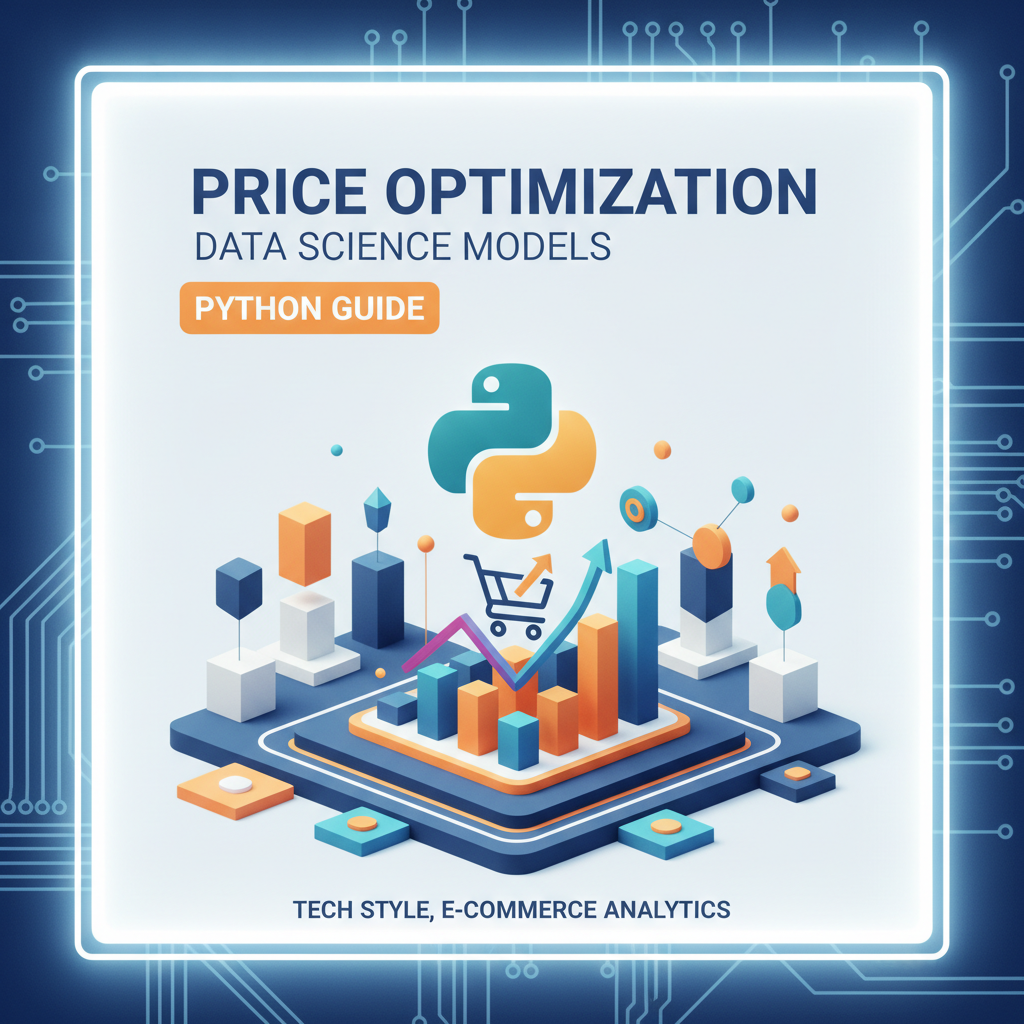
Price Optimization Data Science Models Python Guide
If you’ve ever wondered how the big players in e-commerce seem to always have the perfect price at the perfect moment, the secret is out — they’re using data science. And the good news? You don’t need to be a Fortune 500 company to tap into these strategies. Whether you’re a solo Amazon seller or managing a massive catalog, understanding price optimization data science can completely transform how you approach your pricing game in 2026.
This guide walks you through the core concepts, the Python-based models you can actually use, and how machine learning is reshaping the way sellers compete on price every single day. Let’s get into it.
Price Optimization Data Science Models Python: A Complete Guide for Modern Sellers
What Is Price Optimization Data Science and Why Does It Matter?
At its core, price optimization data science is the practice of using statistical methods, historical data, and predictive algorithms to determine the most effective price point for a product at any given time. It’s not just about being the cheapest — it’s about being the smartest.
Think about it this way: a product priced too low might sell a lot but destroy your margins. Priced too high, and you lose the sale entirely. The sweet spot? That’s what data science helps you find. And in competitive marketplaces like Amazon, where thousands of sellers are fighting for the same Buy Box, this matters more than ever.
In 2026, the landscape has evolved dramatically. Buyers are more price-aware than ever, and competitor repricing happens in milliseconds. A good seller repricer powered by data science doesn’t just react — it predicts and adapts proactively.
| Pricing Approach | Method | Accuracy | Scalability |
|---|---|---|---|
| Manual Pricing | Gut Feeling / Spreadsheets | Low | Very Low |
| Rule-Based Repricing | Fixed Rules | Medium | Medium |
| Data Science Pricing | ML + Statistical Models | High | Very High |
Understanding Price Optimization Models Python Developers Actually Use
Python has become the go-to language for building price optimization models python developers rely on daily. The ecosystem is rich, the libraries are powerful, and the learning curve is manageable. Here are the most popular approaches you’ll encounter:
Linear Regression for Demand Forecasting
Simple but surprisingly effective. Linear regression helps you understand how changes in price relate to changes in demand. Using libraries like scikit-learn, you can train a model on historical sales data and price points to predict future demand with reasonable accuracy. It’s a great starting point before diving into more complex approaches.
Price Elasticity Modeling
Price elasticity tells you how sensitive your customers are to price changes. In Python, this is commonly calculated using log-log regression models. The formula itself is straightforward, but the impact on your pricing decisions is massive. Knowing that a 10% price drop will boost demand by 25% — or barely move the needle — changes everything about your strategy.
Gradient Boosting and XGBoost
For more complex, multi-variable pricing scenarios, gradient boosting methods like XGBoost shine. These models can take into account dozens of features — competitor prices, day of week, stock levels, seasonal trends — and output a recommended price that balances revenue and volume. Many professional repricing software for amazon platforms are built on exactly these types of models under the hood.
Machine Learning Pricing Optimization Python: Taking It to the Next Level
Ready to go deeper? Machine learning pricing optimization python techniques are where things get truly exciting. Unlike rule-based systems that follow predefined logic, ML models learn from patterns in real data and continuously improve over time.
Reinforcement Learning for Dynamic Pricing
This is the frontier of pricing science. Reinforcement learning (RL) trains an agent to make pricing decisions by rewarding it for good outcomes — like winning the Buy Box or increasing revenue — and penalizing bad ones. Libraries like Stable-Baselines3 in Python make RL more accessible than ever. Companies using RL-based pricing have reported significant gains in both margin and market share in 2026.
Clustering for Customer Segmentation
Not all buyers are the same. K-means clustering in Python lets you group customers by behavior, location, or purchase history — and then optimize prices for each segment independently. This kind of nuanced approach is what separates great pricing strategy from average repricing.
| ML Model | Best For | Python Library |
|---|---|---|
| Linear Regression | Basic demand forecasting | scikit-learn |
| XGBoost | Multi-feature price prediction | xgboost |
| Reinforcement Learning | Dynamic real-time pricing | Stable-Baselines3 |
| K-Means Clustering | Customer segmentation pricing | scikit-learn |
FAQ: Price Optimization with Data Science and Python
Do I need to be a data scientist to use these models?
Not necessarily. While building models from scratch requires coding knowledge, many modern tools — including smart repricing software for amazon — have these algorithms built right in. You benefit from the science without writing a single line of Python.
How often should prices be updated?
In fast-moving marketplaces, prices can shift dozens of times per day. Real-time repricing powered by ML means your prices stay competitive around the clock without any manual effort from you.
What data do I need to get started?
Historical sales data, competitor price history, and product-level attributes are the foundation. The more data you feed your model, the more accurate and reliable your pricing decisions become over time.
Is this approach only for large sellers?
Absolutely not. In 2026, even small sellers using a smart seller repricer can access ML-powered pricing without heavy investment in infrastructure.
From Models to Real Results: The Role of Automated Repricing
Building a Python model is one thing — deploying it in a real marketplace environment is another challenge entirely. This is where automated dynamic pricing systems come in. They bridge the gap between data science theory and actual marketplace execution, continuously monitoring competitor behavior, Buy Box status, and market conditions to keep your prices sharp.
The key insight here is that data without action means nothing. Your ML model might identify the perfect price, but if it takes you hours to implement that change, the opportunity is gone. This is why being repriced automatically — in real time — is no longer optional for serious sellers. It’s a competitive necessity.
Ready to see what intelligent repricing can do for your Amazon business? Zupricer combines Buy Box intelligence, profit guardrails, and a powerful strategy engine to automate pricing across your entire catalog. Rated 4.9/5 on Trustpilot and Capterra, with a 14-day free trial and no credit card required — there’s nothing holding you back. Head over to app.zupricer.com/signup and start competing smarter today.