Amazon Pricing Strategy Guide: Price Optimization Tools That Actually Work in 2026
If you’re selling on Amazon in 2026, you already know that pricing is not just a number you slap on a listing and forget about. It’s a living, breathing part of your business that can make or break your Buy Box chances, your profit margins, and ultimately your growth. Understanding the pricing strategy of amazon is no longer optional — it’s survival. In this guide, we’ll break down how Amazon’s pricing ecosystem works, what tools you should be using, and how to stay competitive without racing to the bottom.
What Is the Amazon Pricing Strategy and Why Does It Matter?
Amazon’s marketplace is built on competition, and pricing sits right at the center of that competition. The amazon pricing strategy isn’t a single playbook — it’s a multi-layered system that factors in competitor prices, shipping costs, Buy Box eligibility, inventory levels, and even external marketplace pricing from platforms like Walmart and Target.
One of the most significant shifts in 2026 is how Amazon now calculates the Competitive Price Threshold (CPT). Previously, Amazon only compared your base product price against external competitors. Now, Amazon factors in the total landed price — including shipping fees charged by off-Amazon competitors. This change has triggered a surge in Buy Box suppressions for sellers who thought they were priced competitively but weren’t accounting for the full cost equation. If your price looks great on paper but your competitor offers free shipping elsewhere, Amazon may suppress your Buy Box without warning.
This is exactly why having a solid price optimization tools strategy in place is no longer a nice-to-have — it’s critical infrastructure for your Amazon business.
| Pricing Factor | Old Amazon Logic (Pre-2026) | New Amazon Logic (2026) |
|---|---|---|
| Competitive Price Threshold | Base product price only | Total landed price including shipping |
| B2B Buy Box Driver | Standard retail price | Multi-tier volume discounts |
| Price Elasticity | Manual seller estimates | Amazon’s Brand Elasticity Tool |
| Repricing Speed | Hourly or daily updates | Real-time automated adjustments |
Breaking Down Amazon Pricing Strategies for Sellers in 2026
There’s no one-size-fits-all approach when it comes to amazon pricing strategies. Your approach depends on your category, your competition density, your fulfillment method, and your margin targets. Let’s walk through the most effective strategies sellers are using right now.
Competitive Pricing
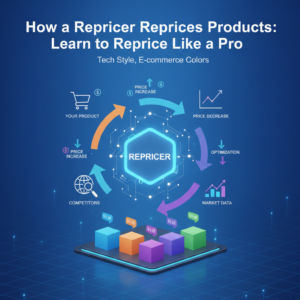
This is the most common approach — you monitor your competitors’ prices and adjust yours to stay in a winning range. The challenge is doing this manually is impossible at scale. Amazon’s marketplace moves fast, and a price change from a competitor can cost you the Buy Box within minutes. Automated repricing tools exist precisely to solve this problem, keeping you competitive around the clock without you lifting a finger.
Value-Based Pricing
Instead of chasing the lowest price, value-based pricing focuses on what your product is actually worth to the buyer. In 2026, Amazon has rolled out a brand-exclusive Price Elasticity tool inside Seller Central that estimates how price changes will impact your conversion rate and sales volume. This is a game-changer because it shifts the seller mindset from undercutting to optimizing — understanding the sweet spot where price meets demand without destroying your margins.
Multi-Tier Business Pricing for B2B
Amazon has updated its B2B marketplace logic so that quantity-based discounts and tiered pricing structures now directly influence who wins the Business Buy Box. If you’re selling to corporate buyers, offering structured volume discounts is no longer just a bonus — it’s a primary ranking factor. Sellers who ignore this update are leaving serious revenue on the table. Your amazon pricing rules need to account for B2B tiers if you want to capture that segment.
How to Use an Amazon Pricing Calculator to Protect Your Margins
Before you set any price, you need to know your numbers cold. An amazon pricing calculator helps you map out your costs — including FBA fees, referral fees, shipping, and cost of goods — so you know the minimum price you can charge before you start losing money. This becomes especially important as Amazon continues to evolve its fee structures in 2026.
The goal isn’t just to win the Buy Box. It’s to win it profitably. Too many sellers get caught in a race to the bottom, slashing prices to stay competitive, only to realize their margins have evaporated. A good pricing calculator anchors your repricing logic to your actual financial reality, not just the competition.
Frequently Asked Questions About Amazon Pricing Strategy
-
What is the most effective amazon pricing strategy for new sellers?
New sellers typically benefit most from competitive pricing combined with profit guardrails. This means automatically matching or slightly undercutting the lowest competitive price while setting a floor price that ensures you never sell below cost. As you build reviews and seller metrics, you can shift toward value-based pricing.
-
How does Amazon decide who wins the Buy Box?
Amazon uses a multi-factor algorithm that includes price, fulfillment method, seller performance metrics, shipping speed, and inventory levels. Price is one of the most influential factors, but it’s not the only one. A slightly higher price with excellent metrics can still win over a lower price with poor performance signals.
-
Why did my Buy Box disappear even though my price didn’t change?
This is increasingly common in 2026 due to Amazon’s updated Competitive Price Threshold that now includes off-Amazon shipping costs. If a competitor on Walmart or Target offers a lower total landed price, Amazon may suppress your Buy Box even if your on-Amazon price is competitive. You need tools that monitor external pricing in real time.
-
Are price optimization tools worth the investment?
Absolutely. Manual repricing simply cannot compete with automated systems that react in real time. Sellers using automated repricing tools consistently report higher Buy Box win rates and better margin preservation compared to those managing prices manually.
| Pricing Strategy | Best For | Key Benefit | Main Risk |
|---|---|---|---|
| Competitive Pricing | High-competition categories | Maximizes Buy Box wins | Margin erosion |
| Value-Based Pricing | Branded or unique products | Protects profit margins | Lower conversion if mispriced |
| Multi-Tier B2B Pricing | Wholesale and bulk sellers | Captures corporate buyers | Complex setup and management |
| Dynamic Repricing | All seller types | Real-time market response | Requires reliable automation tool |
Choosing the Right Competitive Price Tool for Real Amazon Price Optimization
Not every amazon pricing tool on the market is built the same way, and picking the wrong one can end up costing you more than it saves. When you’re comparing options for price optimization amazon sellers actually rely on day to day, the first thing to check is response speed — how quickly does the tool react when a competitor drops their price? A genuine competitive price tool should detect a change and respond within seconds, not hours, because Buy Box ownership can shift in the time it takes a slower system to catch up.
The second thing worth evaluating is how the tool approaches amazon price optimization as a whole. It shouldn’t just chase whoever has the lowest sticker price on the page — it should factor in your margin floor, your fulfillment method, and ideally give you visibility into off-Amazon competitor pricing too, since Amazon’s own algorithm already accounts for that when calculating the Buy Box. A tool that only watches on-Amazon listings is working with incomplete information, and that gap can quietly cost you sales you never even knew you lost.
Here’s a quick breakdown of what typically separates a basic repricer from a full-featured amazon pricing tool built for serious price optimization:
| Feature | Basic Repricer | Full Competitive Price Tool |
|---|---|---|
| Response Speed | Hourly or scheduled checks | Real-time, second-by-second monitoring |
| Margin Protection | Manual floor price only | Automated profit guardrails |
| Off-Amazon Monitoring | Not included | Tracks Walmart, Target, and other marketplaces |
| Strategy Customization | Single rule applied to all ASINs | Scenario-based rules per catalog segment |
At the end of the day, the right amazon pricing tool isn’t the one with the flashiest dashboard — it’s the one that protects your margins while still winning the Buy Box consistently. That combination is what separates sellers who scale profitably from sellers who just stay busy adjusting prices all day.
What Should Actually Happen the Moment a Competitor Changes Price?
It’s worth walking through what a well-built competitive price tool is actually doing behind the scenes, because most sellers only see the outcome — a price change — without understanding the decision chain that produced it. The moment a competing offer shifts, the tool first has to confirm the change is real and not a temporary glitch or an out-of-stock listing that will disappear in minutes. Reacting to noise is just as costly as reacting too slowly, since constantly flipping your price based on unreliable signals damages buyer trust and can even trigger Amazon’s own pricing anomaly flags.
Once the change is confirmed, the logic layer takes over. A serious repricing engine checks the new competitor price against your predefined floor, your target margin, and your Buy Box eligibility rules before it commits to anything. This is the part that separates a basic timer-based repricer from a genuinely intelligent system — it isn’t just asking “can I go lower,” it’s asking “should I, and by how much, given everything else happening on this ASIN right now.” Sellers who rely on a shallow, one-dimensional tool often win the Buy Box for a few hours only to lose the margin they fought for, because the tool had no concept of a stopping point.
Below is a simplified look at the decision sequence a reliable tool follows every time a market shift is detected:
| Step | What Happens | Why It Matters |
|---|---|---|
| Signal Verification | Confirms the competitor’s price change is genuine and not a stock glitch | Prevents reacting to false or temporary data |
| Margin Check | Compares the new price against your floor and target profit | Stops repricing that would sell at a loss |
| Buy Box Evaluation | Weighs price against fulfillment method and account health | Avoids unnecessary price cuts that wouldn’t have won the Buy Box anyway |
| Adjustment & Confirmation | Updates the price and logs the change for reporting | Keeps a clear audit trail of every automated decision |
This is ultimately what you want from a competitive price tool — not just speed, but judgment. Speed without guardrails just gets you to the bottom of the pricing ladder faster, while a tool that combines rapid detection with real financial logic keeps you competitive without quietly eroding the profit you worked to build.
Setting Smart Amazon Pricing Rules That Scale
One of the most underrated skills in Amazon selling is knowing how to build amazon pricing rules that scale with your catalog. Whether you have 50 ASINs or 5,000, your rules need to be consistent, profitable, and flexible enough to adapt to market changes automatically.
Good pricing rules factor in your minimum margin, your Buy Box target price, your competitor’s price movements, and external market signals. In 2026, with Amazon’s B2B Buy Box now rewarding structured volume discounts, your rules also need to account for buyer segments — retail customers versus business buyers may need completely different pricing logic applied to the same product.
The key is building rules once, applying them intelligently across your entire catalog, and letting automation handle the execution. That’s where a dedicated repricing platform becomes invaluable.
Why Zupricer Is the Smart Choice for Amazon Price Optimization
If you’ve made it this far, you know that pricing on Amazon in 2026 is complex, fast-moving, and unforgiving. Manual management isn’t a viable option anymore. You need a tool that combines intelligence with speed — and that’s exactly what Zupricer delivers.
Zupricer is built specifically for Amazon sellers who want to win the Buy Box without sacrificing profit. It combines Buy Box intelligence, profit guardrails, and a scenario-based strategy engine that automates repricing across your entire catalog in real time. Whether you’re FBA or FBM, Zupricer continuously monitors competitor prices, Buy Box status, and market conditions to adjust your prices automatically — keeping you competitive around the clock.
Rated 4.9 out of 5 on both Trustpilot and Capterra, Zupricer is trusted by sellers who are serious about growth. And the best part? You can try it free for 14 days with no credit card required. Head over to Zupricer and start your free trial today — because the sellers winning in 2026 are the ones who automate smart, not just fast.
Essential Features Every Competitive Price Tool Must Have
When evaluating a competitive price tool for your Amazon business, understanding which features actually matter separates a productive investment from wasted subscription dollars. Real-time monitoring sits at the foundation of any serious tool because marketplace prices shift constantly throughout the day, and delayed detection means lost Buy Box opportunities you never even knew existed. A reliable system tracks competitor price changes as they happen and responds within seconds, not hours, ensuring you maintain competitive positioning without manual intervention.
Multi-marketplace tracking has become non-negotiable in 2026 since Amazon’s Competitive Price Threshold now factors in off-Amazon pricing from retailers like Walmart and Target when determining Buy Box eligibility. If your tool only watches Amazon listings, you’re operating with incomplete information that can trigger unexpected Buy Box suppressions. Historical data analysis provides the context needed to identify pricing patterns, seasonal trends, and competitor behavior over time, transforming raw price points into actionable intelligence that informs smarter repricing decisions.
Alert systems ensure you stay informed about critical market events without constantly monitoring dashboards. Instant notifications when competitors breach your Minimum Advertised Price policies, when unauthorized sellers appear on your listings, or when sudden price drops threaten your Buy Box position allow you to respond strategically rather than reactively. According to Price Trakker, effective monitoring tools deliver automatic alerts that help sellers quickly spot unauthorized sellers or grey market activity while maintaining a full timeline of price and seller changes for each SKU.
Buy Box Integration and Fulfillment Method Tracking
Buy Box integration separates basic price trackers from tools built specifically for Amazon success. Your competitive price monitoring software must understand Buy Box mechanics at a granular level, tracking not just who holds the Buy Box but why they hold it. This means monitoring fulfillment methods since FBA sellers typically maintain an advantage over FBM sellers even at slightly higher price points. Visualping notes that automated Buy Box monitoring allows sellers to see when their product listings lose or gain the Buy Box, with features like bulk ASIN uploads and customizable check intervals providing the flexibility needed to manage large catalogs efficiently.
Tracking inventory levels, Prime status, and shipping speed across competitors gives you the complete picture of what drives Buy Box assignment. A tool that only reports competitor prices without contextualizing fulfillment advantages leaves you guessing why a higher-priced competitor keeps winning. SalesDuo research confirms that successful sellers track factors beyond price, including fulfillment method, shipping speed, and seller rating, since these elements collectively determine Buy Box eligibility more than price alone.
Implementing Price Optimization on Amazon: A Step-by-Step Framework
Successfully implementing price optimization amazon sellers rely on requires a structured approach that combines data collection, testing, measurement, and continuous adjustment. The first step involves establishing your baseline by gathering clean historical sales data from Seller Central covering at least 30 to 90 days. Filter out anomalies like stockouts, lightning deals, or major ranking fluctuations unrelated to pricing to ensure your baseline reflects normal market conditions. This foundation allows you to measure the true impact of price changes without confusing correlation with causation.
Setting strategic test price points comes next, and Seller Sprite recommends selecting products with stable daily traffic of at least 10 to 15 orders for reliable testing. Choose three price levels: your current price as the control, a lower test price around 8% below baseline, and a higher test price approximately 8% above baseline. Run each phase sequentially over two-week periods to gather statistically meaningful data while minimizing external variables that could skew results. Week one and two maintain your current price to establish the control baseline, weeks three and four test the lower price point, and weeks five and six evaluate the higher price.
Measuring Price Elasticity and Adjusting Strategy
Calculating price elasticity transforms raw test data into actionable insights about how your customers respond to price changes. The formula divides the percentage change in quantity demanded by the percentage change in price, producing a coefficient that reveals demand sensitivity. When elasticity exceeds 1.0, demand is elastic and lowering prices can increase total revenue since volume gains outweigh per-unit margin losses. Elasticity below 1.0 indicates inelastic demand where you can raise prices with minimal volume impact, directly improving profit margins without sacrificing significant sales.
Continuous adjustment based on performance data closes the optimization loop. Monitor competitor price movements, advertising spend fluctuations, and marketplace traffic patterns while computing elasticity for each significant price change. Project revenue impact at scale before committing to permanent pricing adjustments, and maintain detailed records of what worked and what didn’t across different product categories. This iterative approach compounds over time as you build institutional knowledge about which ASINs tolerate premium pricing and which require aggressive competitive positioning.
Evaluating Whether a Tool Meets Amazon-Specific Requirements
Not every competitive price monitoring platform understands Amazon’s unique ecosystem, and choosing a tool without Amazon-specific capabilities creates blind spots that quietly cost you sales. Buy Box integration must go beyond simple price tracking to include real-time Buy Box status monitoring, competitor fulfillment method identification, and historical Buy Box ownership patterns. The tool should automatically detect when you lose the Buy Box and immediately analyze whether the loss resulted from price, fulfillment disadvantage, or account health issues.
FBA versus FBM differentiation matters because Amazon’s algorithm weights these fulfillment methods differently when calculating Buy Box eligibility. Your monitoring tool must clearly identify which competitors use FBA and which use FBM, allowing you to set appropriate pricing strategies for each scenario. Competing against an FBM seller requires different tactics than competing against another FBA seller, and tools that treat all competitors identically force you to make pricing decisions without critical context.
External marketplace coverage has become essential in 2026 since Amazon now includes off-platform pricing in its Competitive Price Threshold calculations. Jungle Scout research confirms that if competitors offer lower prices on platforms like Walmart, eBay, or Shopify, it influences Amazon’s pricing algorithms and impacts your sales even when your on-Amazon price appears competitive. A tool lacking multi-marketplace visibility leaves you vulnerable to Buy Box suppressions triggered by pricing you cannot see, making external coverage a requirement rather than a luxury feature.
Common Evaluation Mistakes and How to Avoid Them
Sellers frequently choose competitive price tools based on dashboard aesthetics or feature lists without testing whether those features actually function reliably under real market conditions. The most common mistake involves selecting tools with inadequate data refresh rates that check competitor prices hourly or daily rather than continuously. In fast-moving categories, hourly checks mean you lose the Buy Box for 59 minutes before your tool even detects the competitor price change that caused the loss. Pricefy warns that optimization built on stale or partial competitor data optimizes toward the wrong target, creating the illusion of smart repricing while actually degrading performance.
Another frequent error involves choosing tools that lack proper margin protection, leading to over-optimization where sellers squeeze every last cent in ways customers notice and that erode the trust keeping them buying. Your evaluation process should include testing the tool’s floor price enforcement under various competitive scenarios to confirm it never reprices below your minimum acceptable margin regardless of market pressure. Request detailed reporting capabilities during trials to verify the tool provides clear audit trails showing why each repricing decision was made, ensuring you maintain visibility into automated actions affecting your business.