Amazon Dynamic Pricing: Your Guide to Repricer Amazon & Amazon Repricing
If you’re selling on Amazon right now, you already know the marketplace never sleeps. Prices shift every few minutes, competitors undercut you without warning, and the Buy Box feels like it belongs to someone else more often than you’d like. That’s exactly why understanding amazon dynamic pricing isn’t just helpful — it’s absolutely essential for survival and growth in 2026.
The good news? You don’t have to manually track every price movement or lose sleep over competitor strategies. Smart repricing tools have completely transformed the way sellers manage their catalogs, and the results are genuinely exciting.
Amazon Dynamic Pricing, Repricer Amazon & Amazon Repricing: Everything You Need to Know
Let’s break this whole thing down in a way that actually makes sense, whether you’re brand new to automated pricing or you’ve been selling for years and just want to level up your game.
What Is Amazon Dynamic Pricing and Why Does It Matter?
Amazon dynamic pricing refers to the practice of automatically adjusting product prices in real time based on market conditions, competitor activity, demand signals, and Buy Box status. Amazon itself has been using dynamic pricing algorithms for over a decade, sometimes changing prices millions of times per day across its own catalog.
For third-party sellers, this creates both a challenge and an opportunity. The challenge is that static pricing simply doesn’t work anymore. The opportunity is that sellers who embrace automated repricing gain a serious competitive edge over those who don’t.
| Pricing Approach | Speed | Accuracy | Buy Box Win Rate | Effort Required |
|---|---|---|---|---|
| Manual Pricing | Slow | Low | Inconsistent | Very High |
| Rule-Based Repricing | Fast | Medium | Moderate | Low |
| AI-Driven Dynamic Pricing | Real-Time | High | Strong | Minimal |
How a Repricer Amazon Tool Actually Works
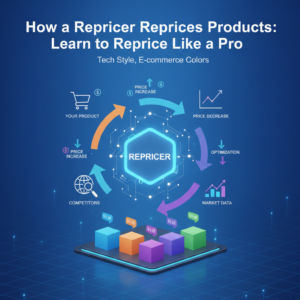
A repricer amazon tool monitors your listings around the clock, tracks what your competitors are charging, watches Buy Box ownership shifts, and automatically adjusts your prices to maximize both competitiveness and profit margin. It’s like having a full-time pricing analyst working 24/7 without the salary.
Modern repricers go far beyond simple “match the lowest price” logic. The best dynamic repricing tools use scenario-based strategies that factor in your minimum and maximum price thresholds, Buy Box eligibility, fulfillment method, and real-time market data to make smarter decisions.
Key Features to Look For
- Real-time competitor price monitoring
- Buy Box intelligence and status tracking
- Profit guardrails to prevent pricing below cost
- Support for both FBA and FBM sellers
- Scenario-based strategy customization
- Bulk repricing across large catalogs
Why Profit Protection Matters More Than You Think
A lot of sellers make the mistake of chasing the Buy Box at any cost. The problem? Without proper guardrails, your repricer can spiral your prices downward in a race to the bottom that destroys your margins. That’s why tools with built-in profit protection are worth their weight in gold. When properly configured, your prices stay competitive but never dip below what actually makes you money.
Amazon Repricing Strategies That Win in 2026
The landscape of amazon repricing has evolved dramatically. Sellers who used to get by with basic rule sets are now discovering they need more sophisticated approaches to stay ahead. Here’s what’s working right now.
Buy Box-Focused Repricing
The Buy Box is still the golden ticket on Amazon — the majority of sales go through it. A Buy Box-focused strategy means your repricer constantly evaluates your position relative to current Buy Box holders and adjusts your price incrementally to win and maintain ownership without unnecessary margin loss.
Competitive Intelligence Repricing
This strategy goes beyond just reacting to prices. It involves analyzing competitor behavior patterns, identifying when rivals are running low on stock, and seizing those moments to adjust prices strategically rather than defensively.
| Strategy Type | Best For | Primary Goal |
|---|---|---|
| Buy Box Focused | High-volume competitive listings | Win Buy Box consistently |
| Competitive Intelligence | Sellers with strong inventory | Exploit competitor gaps |
| Profit Maximization | Low-competition niches | Maximize margin per sale |
Frequently Asked Questions
Is Amazon repricing safe for my account?
Yes, when done correctly with a reputable tool, repricing is completely safe and within Amazon’s terms of service. It simply automates what you’d be doing manually anyway.
What about amazon repricing magento integration?
Sellers running multi-channel operations sometimes ask about amazon repricing magento compatibility. The good news is that many advanced repricing platforms are built to work alongside various ecommerce ecosystems, helping you maintain pricing consistency across channels.
How quickly does repricing happen?
Top-tier tools reprice in real time or near-real time, meaning your listings stay competitive even during rapid market shifts. Once your listing has been repriced, you’ll often see immediate improvements in Buy Box ownership percentages.
What about tools like repriceit?
Some sellers mention repriceit as a legacy option they’ve tried. While basic tools served a purpose in earlier days, the competitive Amazon landscape of 2026 demands more advanced capabilities including AI-driven logic, profit guardrails, and multi-strategy engines.
Why Zupricer Is the Smart Choice Right Now
Zupricer is purpose-built for Amazon sellers who want real results without the complexity. It combines Buy Box intelligence, profit guardrails, and a powerful scenario-based strategy engine to automate repricing across your entire catalog at scale. Whether you’re FBA, FBM, or both, Zupricer has you covered. It’s rated 4.9/5 on both Trustpilot and Capterra — and honestly, those numbers speak for themselves.
Ready to stop losing the Buy Box and start winning it consistently? Head over to Zupricer and kick off your 14-day free trial today — no credit card required. Your competition isn’t waiting, and neither should you.
Real-World Pricing Scenarios: Numbers That Make Sense
Understanding amazon dynamic pricing theory is one thing, but seeing how it works with actual numbers makes everything click. Let’s walk through specific scenarios that Amazon sellers face every single day.
Scenario 1: The Margin Protection Challenge
Imagine you’re selling a popular electronics accessory. Your product costs $10 to source, Amazon FBA fees total $4.50, and you want a 30% profit margin. Your minimum viable price is $18.85. A competitor suddenly drops their price to $17.99, triggering your repricer amazon tool. Without profit protection settings, your repricer might match that price, causing you to lose $0.86 on every sale. With proper minimum price rules configured, your repricer holds at $18.85, protecting your margins while monitoring for opportunities when competitors raise prices or run out of stock.
Scenario 2: The Buy Box Win After Competitor Stockout
You’re competing against three other sellers on a home goods item. The current buy box holder is priced at $24.99, and you’re at $25.49. Your amazon repricer tool with competitive intelligence repricing detects that the Buy Box holder’s inventory dropped to just 3 units. Instead of immediately undercutting, your repricer waits. Within 2 hours, that competitor sells out. Your tool instantly adjusts your price to $25.29 — just competitive enough to win the Buy Box against the remaining sellers while preserving an extra $0.30 per unit compared to aggressive undercutting.
Cost Analysis: Manual vs Automated Repricing
Many sellers hesitate to invest in dynamic repricing tools, wondering if the subscription cost justifies the benefit. Let’s break down the real numbers. Manual repricing for a catalog of 100+ SKUs typically requires 10-20 hours per week. At a conservative $25/hour value of your time, that’s $250-$500 weekly, or $1,000-$2,000 monthly. Meanwhile, repricing strategies tools range from $25-$500 per month depending on catalog size and features. Even at the higher end, you’re saving 75% compared to manual effort while achieving better results through real-time repricing.
| Approach | Monthly Time Investment | Opportunity Cost | Tool Cost | Total Monthly Cost |
|---|---|---|---|---|
| Manual Repricing | 40-80 hours | $1,000-$2,000 | $0 | $1,000-$2,000 |
| Automated Repricing | 2-4 hours | $50-$100 | $25-$500 | $75-$600 |
Common Repricing Mistakes That Destroy Profits
Research shows that 67% of sellers who start using repricers initially set their minimum prices too low, leading to the dreaded race to the bottom. Here’s what to avoid and how to fix these costly errors.
Mistake 1: Ignoring Fulfillment Method Differences
FBA sellers can typically price 15-20% higher than FBM sellers and still win the Buy Box thanks to Prime eligibility. If you’re FBA and your repricer is matching FBM competitors dollar-for-dollar, you’re leaving serious money on the table. Configure your automated pricing rules to account for this advantage.
Mistake 2: Over-Repricing Frequency
Some sellers think more frequent repricing equals better results. However, changing prices more than every 15 minutes can trigger Amazon’s price monitoring systems and create customer confusion. Optimal repricing frequency balances responsiveness with stability — typically every 15-30 minutes for competitive items, less frequently for stable niches.
Mistake 3: Matching Non-Buy Box Eligible Competitors
Not every competitor can actually win the Buy Box due to poor seller metrics, slow shipping, or account issues. If your repricer blindly matches these sellers’ prices, you’re undercutting yourself unnecessarily. Advanced tools filter out ineligible competitors, ensuring you only compete against sellers who actually matter.
Advanced Metrics Beyond Basic Buy Box Percentage
Winning the Buy Box 50% of the time sounds great, but that number alone doesn’t tell the complete story. Sophisticated sellers track additional metrics that reveal the true health of their pricing strategy.
Velocity Score and Price Elasticity
Your velocity score measures sales per day per SKU. When combined with price elasticity data — how your sales volume responds to 1% price changes — you can identify your optimal price point. For example, if raising your price 3% only reduces sales by 1%, you’ve just discovered a 2% profit opportunity hiding in plain sight.
Competitive Gap Ratio
This metric compares your price to the median competitor price. A ratio of 1.05 means you’re priced 5% above the median. Tracking this over time reveals whether you’re maintaining premium positioning or getting squeezed by market compression. Successful sellers typically maintain ratios between 0.95-1.10 depending on their value proposition.
Recovery Time Analysis
How quickly does your repricer win back the Buy Box after losing it? Top performers average under 5 minutes. If your recovery time exceeds 15 minutes, you’re losing sales during those gaps. This metric directly reflects your repricer’s speed and strategy effectiveness.