Pricing Strategy of Amazon vs Walmart’s Pricing Strategy
Pricing in retail has never been more cutthroat than it is in 2026. Whether you’re a solo seller trying to squeeze out margin or a growing brand managing hundreds of SKUs, understanding how the two biggest players in the game approach pricing is genuinely useful. Amazon and Walmart dominate retail for a reason — and a big chunk of that reason is how they price. Let’s dig into what each company actually does, why it works, and what it means for you as a seller.
Before we get into the nuts and bolts, it’s worth noting that these aren’t just academic comparisons. Real sellers are making real decisions every day based on how these pricing environments work. Knowing the difference can change how you set floors, respond to competition, and protect your profit margins.
Pricing Strategy of Amazon vs Walmart’s Pricing Strategy: How a Competitive Price Tool Changes the Game
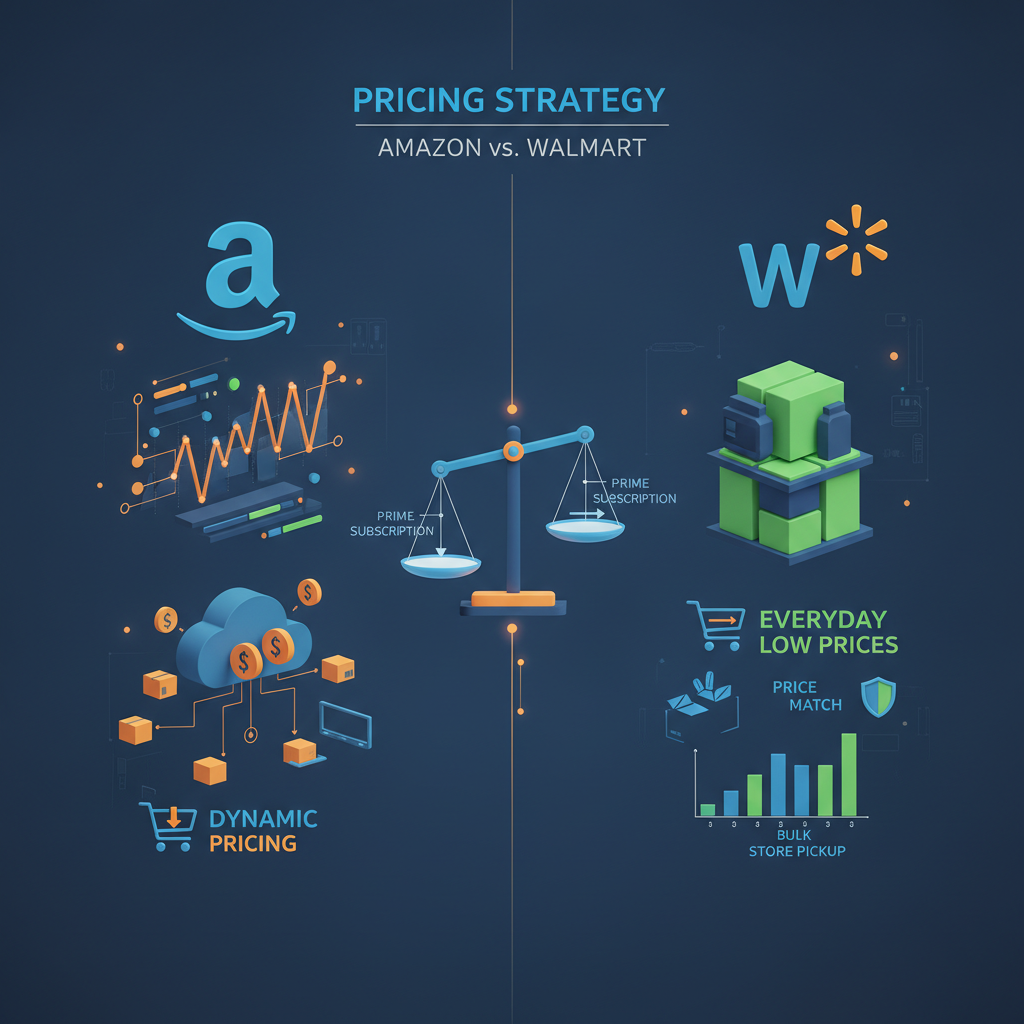
Amazon and Walmart are both obsessed with price — but in very different ways. Amazon is reactive and real-time. Walmart is deliberate and cost-driven. Understanding where they diverge helps sellers figure out which approach fits their catalog and which tools they actually need to stay competitive.
The pricing strategy of amazon centers on algorithmic, demand-sensitive price adjustments that happen continuously — sometimes millions of times in a single day. It’s not a human sitting at a desk lowering prices manually. It’s a system that reads demand signals, competitor moves, inventory levels, and historical conversion data to find the price that wins the most sales at the best possible margin.
Amazon’s Pricing Model: Fast, Algorithmic, and Buy Box Focused
Amazon’s approach to pricing is probably the most sophisticated in retail history. At its core, Amazon wants to present the most competitive price to shoppers at every given moment. For third-party sellers, this means the Buy Box — that coveted purchase button — is won or lost partly based on price. But not just the lowest price. Amazon weighs seller performance metrics, fulfillment method, shipping time, and feedback scores alongside price.
This is why repricing on amazon has become a standard part of running a successful seller account. If you’re not adjusting prices in response to competitors, you’re likely losing the Buy Box to someone who is. And losing the Buy Box means losing visibility, which means losing sales. It’s a chain reaction that happens fast.
| Pricing Factor | Amazon | Walmart |
|---|---|---|
| Price Update Frequency | Millions of times per day | Stable, periodic adjustments |
| Core Philosophy | Dynamic, real-time competitiveness | Everyday Low Price (EDLP) |
| Seller Flexibility | High — automation encouraged | Moderate — tighter price controls |
| Key Winning Factor | Buy Box algorithm | Supplier cost negotiation |
| Best Tool Type | AI-powered repricer | Manual or rule-based pricing |
Walmart’s Pricing Strategy: Consistency as a Competitive Weapon
Walmart built its entire brand identity around the promise of always having low prices — not just during sales events, but every single day. Walmart’s pricing strategy is called Everyday Low Price, or EDLP, and it’s a fundamentally different mindset. Rather than reacting to competitor pricing minute-by-minute, Walmart goes upstream and negotiates supplier costs down to a level where they can sustainably offer lower prices without relying on promotions.
This model builds shopper trust. Customers don’t have to wait for a sale or wonder if they’re getting a good deal — they just know Walmart is cheap. It’s a psychological win that drives loyalty and repeat visits. But behind the scenes, Walmart still uses data extensively to monitor market prices and make adjustments when competitive pressure demands it.
What This Means for Third-Party Sellers on Each Platform
If you sell on Amazon, dynamic pricing isn’t optional — it’s survival. You need to be able to respond to price changes quickly or you’ll find yourself consistently outside the Buy Box. For sellers managing large catalogs, fba repricing software is the only realistic way to do this at scale. Manual monitoring just doesn’t cut it when competitors are changing prices hundreds of times a day.
If you sell on Walmart Marketplace, pricing is a bit more forgiving in terms of frequency — but Walmart’s algorithm still rewards competitive pricing. The platform is growing fast in 2026, and more sellers are jumping in, which means pressure is building there too.
The Growing Need for a Competitive Price Tool
Whether you’re on Amazon, Walmart, or both, having a reliable competitive price tool in your corner isn’t a luxury anymore — it’s table stakes. These tools monitor competitor prices, track Buy Box ownership, and automatically adjust your listings to keep you in the game without tanking your margins.
For sellers operating in international markets, tools like amazon repricer india solutions have opened up new opportunities to compete effectively in price-sensitive, high-volume marketplaces. The demand for smart, localized repricing is growing as Amazon expands globally.
To understand the full picture of how pricing rules and automation work together, exploring the landscape of Amazon pricing strategy tools and rules for 2026 gives sellers a solid foundation to build from.
FAQ: Amazon and Walmart Pricing Strategy Questions Answered
Why does Amazon change prices so often?
Amazon’s algorithm responds to real-time signals — competitor prices, demand spikes, inventory levels, and more. The goal is to always show shoppers the most competitive option, which means prices shift constantly. For sellers, this makes automated repricing essential.
Does Walmart use dynamic pricing like Amazon?
Not in the same way. Walmart’s EDLP model prioritizes stability over real-time reactivity. That said, Walmart does monitor competitors and adjusts when needed — it’s just less frequent and more deliberate than Amazon’s approach.
Is FBA repricing software worth it for smaller sellers?
Absolutely. Even with a small catalog, fba repricing software saves time, protects margins, and keeps you competitive in the Buy Box race. Many repricers offer tiered pricing, so smaller sellers can access core features without overpaying.
Can one repricing tool handle both Amazon and Walmart?
Some multi-channel tools exist, but dedicated Amazon repricers typically outperform them when it comes to Buy Box nuances and FBA/FBM logic. If Amazon is your primary channel, a specialized tool is almost always the smarter choice.
| Seller Type | Recommended Approach | Tool Priority |
|---|---|---|
| Small Amazon Seller | Rule-based repricing | Entry-level repricer |
| Large FBA Seller | AI-driven, scenario-based repricing | Advanced FBA repricing software |
| Walmart-Only Seller | Manual with periodic reviews | Basic price monitoring tool |
| Multi-Channel Seller | Platform-specific tools per channel | Dedicated repricers per marketplace |
Repricing Is a Strategy, Not Just a Feature
One thing sellers often get wrong is treating repricing on amazon like a set-it-and-forget-it checkbox. It’s not. It’s an ongoing strategy that needs guardrails, profit floors, and regular tuning. The best repricers don’t just race to the bottom — they find the sweet spot where you’re competitive enough to win without destroying your margins in the process.
The Takeaway for Sellers in 2026
Amazon moves fast and rewards sellers who can keep up. Walmart rewards consistency and cost discipline. If you’re on Amazon, smart automated repricing is non-negotiable. If you’re on Walmart, strategic pricing backed by solid supplier relationships gives you the edge. And if you’re on both? You need tools and systems that let you manage each environment on its own terms.
Pricing is where strategy meets execution, and in 2026 that execution has to be automated, intelligent, and always-on. The sellers who get this right aren’t just surviving — they’re scaling.
If you’re ready to stop guessing and start winning the Buy Box with confidence, Zupricer is built exactly for that. With Buy Box intelligence, profit guardrails, and a scenario-based repricing engine that works for both FBA and FBM sellers, it’s the kind of tool that pays for itself fast. Try it free for 14 days — no credit card needed. Join thousands of sellers already seeing results at app.zupricer.com/signup.