Master Amazon Pricing Strategy with Top Strategies & Calculator
Are you really leaving money on the table every single day just because your prices aren’t optimized? If you’re selling on Amazon in 2026 and still relying on gut feelings or manual price checks, it might be time to seriously rethink your approach. The competition out there is brutal, margins are tighter than ever, and the Buy Box isn’t going to win itself. So what does it actually take to price smartly on Amazon today?
What Is the Right Amazon Pricing Strategy for Your Business?
This is the question every seller should be asking themselves before they list a single product. Pricing on Amazon isn’t just about being the cheapest option — it’s about being the smartest option. Could a well-thought-out amazon pricing strategy be the difference between thriving and barely surviving on the platform? Absolutely. Whether you’re an FBA seller juggling fulfillment fees or an FBM seller trying to stay competitive, the right strategy sets the foundation for everything else you do.
Think about it this way — Amazon’s algorithm is constantly watching. It monitors your price relative to competitors, tracks your Buy Box eligibility, and adjusts rankings accordingly. Sellers who ignore this dynamic often wonder why their sales suddenly dry up. The ones who pay attention, though? They consistently outperform.
| Pricing Strategy | Best For | Risk Level | Buy Box Impact |
|---|---|---|---|
| Competitive Repricing | High-volume sellers | Low-Medium | High |
| Penetration Pricing | New listings | Medium | Medium |
| Value-Based Pricing | Unique/branded products | Low | Medium |
| Dynamic Pricing | Seasonal or trending items | Medium-High | Very High |
Breaking Down Amazon Pricing Strategies That Actually Work
There’s no shortage of amazon pricing strategies floating around online, but which ones are actually worth your time? Let’s be real — not every tactic works for every seller. What works for a private label brand might tank a reseller’s margins in a heartbeat. That’s why understanding the core strategies is so critical before automating anything.
Competitive repricing is arguably the most popular approach in 2026. It means your prices automatically adjust based on what your competitors are doing in real time. Amazon’s Buy Box algorithm heavily favors sellers who maintain competitive pricing, and studies from various seller communities show that Buy Box ownership can account for well over 80% of all sales on a given listing. Does that number make you think differently about how you’re currently pricing?
Then there’s value-based pricing, which leans on your product’s perceived worth rather than just undercutting the market. For branded or unique products, this can be incredibly effective. And penetration pricing? That’s the classic “go low to get noticed” play — great for new listings trying to build velocity and reviews early on.
Why Manual Pricing Is Costing You More Than You Think
Here’s an uncomfortable truth — if you’re manually adjusting prices, you’re already behind. Markets move fast on Amazon. Competitor prices can shift dozens of times a day, and by the time you’ve logged in and made an update, you’ve already missed multiple Buy Box opportunities. Doesn’t that sound exhausting and inefficient?
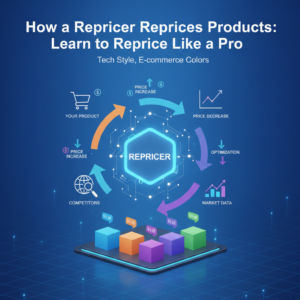
This is exactly why repricers have become such an essential part of any serious Amazon seller’s toolkit. Automated repricers handle the constant price monitoring so you don’t have to. They react in real time to market changes, keeping you competitive around the clock — even while you sleep.
How a Repricer Tool Protects Your Profit Margins
Not all repricing solutions are created equal, and this is where the quality of your repricer tool really matters. A solid repricer tool doesn’t just chase the lowest price — it uses intelligent rules and profit guardrails to make sure you never drop below your minimum acceptable margin. That’s a game changer for sellers who’ve been burned by race-to-the-bottom pricing wars.
Looking for a cheap repricer that doesn’t sacrifice quality? That’s a totally valid concern, especially for smaller sellers or those just getting started. The good news is that a cheap repricer doesn’t have to mean a weak one — it just means finding a tool that delivers real value at an accessible price point.
Using an Amazon Pricing Calculator to Set Smart Baselines
Before you automate anything, you need to know your numbers cold. That’s where an amazon pricing calculator becomes your best friend. Have you ever actually sat down and calculated your true cost per unit after factoring in Amazon fees, fulfillment costs, advertising spend, and return rates? Most sellers haven’t — and that gap in knowledge is costing them real money.
An accurate pricing calculator helps you determine the minimum price you can charge while still turning a profit. Once you have that floor established, your repricing strategy has a solid, data-driven foundation to work from instead of just guessing.
| Cost Component | Example Amount | Notes |
|---|---|---|
| Product Cost | $8.00 | Per unit landed cost |
| Amazon Referral Fee | $2.25 | ~15% of sale price |
| FBA Fulfillment Fee | $3.50 | Size/weight dependent |
| PPC Advertising | $1.50 | Estimated per unit |
| Minimum Profitable Price | $17.00+ | Before target margin |
Frequently Asked Questions About Amazon Pricing
-
What is the most effective pricing strategy on Amazon in 2026?
Dynamic competitive repricing combined with profit guardrails tends to deliver the best results for most seller types. It keeps you competitive without sacrificing your margins.
-
How often should I adjust my Amazon prices?
Ideally, your prices should be adjusting in real time or at minimum several times per day based on competitor movements and Buy Box status changes.
-
Is a cheap repricer worth it for small sellers?
Yes — even entry-level repricing tools can dramatically improve Buy Box win rates. The key is finding one with smart rules rather than just basic lowest-price matching.
-
Do I need a pricing calculator before using a repricer?
Absolutely. Knowing your cost floor is essential before automating any pricing changes. Without it, you risk repricing yourself into unprofitable territory.
How Zupricer Brings All of This Together
If you’re serious about winning on Amazon in 2026, understanding the full picture of pricing strategies and Buy Box intelligence is just the starting point. Execution is where most sellers fall short — and that’s exactly the gap Zupricer was built to close.
Zupricer is an Amazon repricing tool designed from the ground up for sellers who want real results. It combines Buy Box intelligence, profit guardrails, and a scenario-based strategy engine to automate repricing across your entire catalog. Whether you’re FBA or FBM, Zupricer continuously monitors competitor prices and market conditions, adjusting your listings in real time so you can stay competitive without babysitting your account all day.
Rated 4.9/5 on both Trustpilot and Capterra, Zupricer has earned the trust of sellers who care about both winning the Buy Box and protecting their bottom line. And with a 14-day free trial that requires no credit card, what’s stopping you from finding out what smarter pricing could do for your business? Head over to Zupricer today and take control of your Amazon pricing — your future self will thank you.
Psychological Pricing Tactics That Influence Amazon Buyers
Have you ever wondered why so many products on Amazon end in .99 instead of rounding up to the next dollar? This isn’t random — it’s a deliberate psychological pricing tactic called charm pricing, and it works remarkably well. Research shows that pricing at $19.99 instead of $20.00 exploits what psychologists call left-digit bias, where shoppers focus primarily on the first number they see. Amazon data from 2025 confirms that buyers are still drawn to prices ending in .99 or .95, making this a foundational element of any effective amazon pricing strategy.
Price anchoring is another powerful technique that savvy sellers use to make their current price feel like a bargain. When Amazon displays a “Was” price with a strikethrough next to your selling price, it creates an anchor point that makes the current offer seem more attractive. For example, showing a product at £14.99 with “RRP £19.99” crossed out immediately frames the purchase as a smart deal, even if the product rarely sold at the higher price.
The decoy effect takes this concept further by presenting three pricing options where one choice appears deliberately less attractive, making another option seem like the obvious best value. This strategy works particularly well for product variations or bundles, where you can guide customers toward your most profitable option simply through strategic price positioning.
Seasonal Pricing Adjustments and Holiday Strategy
Seasonal pricing requires a more nuanced approach than many sellers realize. While conventional wisdom suggests dropping prices during peak shopping periods, data from 2026 reveals a counter-intuitive truth — raising prices during high-demand seasons can actually boost profitability. One seller raised their whey protein price from $39.99 to $44.99 on January 1st and experienced their highest-margin month, capitalizing on New Year fitness goals when demand was inelastic and competitors were selling out.
Prime Day has evolved significantly, extending to four days in 2025 compared to the traditional two-day event. This expansion means sellers need extended peak planning with flexible dynamic pricing strategies and sufficient inventory depth. Lightning Deals during these events require minimum 15% discounts, FBA fulfillment, and at least a 3.5-star rating as of 2026. Smart sellers submit their Lightning Deal applications 4-8 weeks early for major events to secure prime placement.
Understanding MAP Policy and Compliance Challenges
Minimum Advertised Price policies create confusion for many Amazon sellers, but here’s what you need to know — Amazon does not enforce MAP policies. MAP is a private agreement between brands and individual sellers, meaning brands must monitor and enforce their own pricing standards. This hands-off approach from Amazon means competitive repricing tools can sometimes push prices below MAP thresholds if sellers aren’t careful.
Common MAP violations on Amazon include coupons that bring the final advertised price below MAP, Lightning Deals, Subscribe & Save discounts, and sale badges showing “Was $60, now $45” when $45 violates the brand’s MAP. It’s crucial to understand that MAP controls publicly advertised prices but may not always control the final checkout price, creating a gray area that requires careful navigation.
Advanced Pricing Techniques for Competitive Advantage
Bundle Pricing as a Strategic Defense
When competitors undercut your price and you’re stuck in a race to the bottom, bundle pricing offers an elegant escape route. By creating a new product bundle — say, combining your main product with a complementary item — you establish a completely new ASIN with no direct price comparison. This removes you from automated repricing wars while protecting your profit margins.
Bundles exploit the psychological difficulty customers have calculating per-unit value. A three-pack priced at £24.99 when individual items sell for £9.99 feels like a deal, even though the actual savings is only £5. This perception gap is where smart sellers find profitable opportunities that competitors overlook.
Systematic Price Testing Methodology
How do you know if you’re leaving money on the table with your current pricing? The answer lies in systematic testing rather than guesswork. A/B price testing involves comparing different price points — for example, $10.00 versus $9.99 versus $9.97 — and measuring conversion rate differences. One 2026 case study found that $9.99 beat $10.00 by 11% in conversion rate, while the difference between $9.99 and $9.97 was negligible.
The 10-week price ladder approach offers a more gradual testing framework. Sellers incrementally test price points upward, tracking unit session percentage and buy box percentage after each adjustment. When conversion holds steady at a higher price point, you’ve discovered your optimal pricing ceiling without sacrificing sales velocity.
Tools for Competitor Analysis and Price Monitoring
Effective value-based pricing requires knowing exactly what your competitors are doing. Tools like Keepa provide detailed price history tracking for approximately $20 per month, while CamelCamelCamel offers free basic price tracking. For broader market insights, Jungle Scout and Helium 10 help identify product niches and competitive landscapes before you even enter a market.
For brands concerned about MAP compliance, specialized monitoring tools like TrackStreet, Wiser, MAPP Trap, and Brand Cops scan marketplaces continuously to identify violations. These tools are essential for brands selling through multiple resellers who need to maintain pricing integrity across channels.